

























































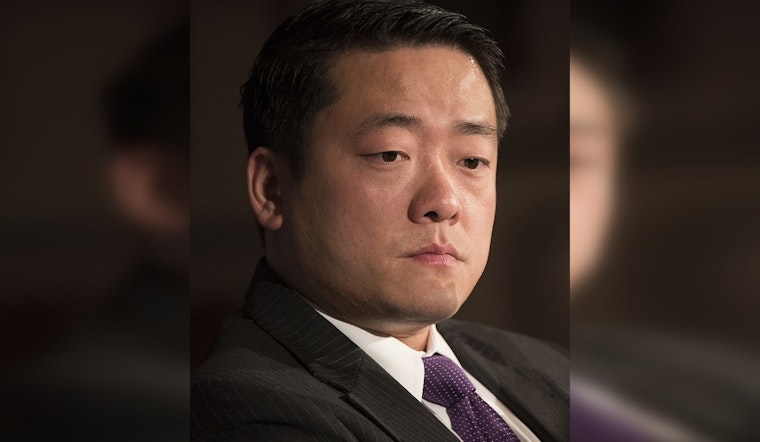
In a move stirring considerable controversy, Texas Governor Greg Abbott has taken aggressive legal action aiming to remove Houston Rep. Gene Wu from his position as part of an ongoing conflict over redistricting efforts in the state, an issue that has seen over 50 House Democrats leave Texas in an attempt to prevent a legislative quorum, according to Click2Houston. Abbott filed an emergency petition with the all-Republican Texas Supreme Court, calling Wu the "ringleader of the derelict Democrats," claiming that he and his colleagues had abandoned their posts by fleeing the state to hold up a vote on redrawn congressional districts, a direct response to Democrats' absence from Texas House roll call on consecutive days, as per KHOU.
Using a writ of Quo Warranto to challenge Wu's right to hold office, Abbott argued that denying a quorum was a demonstrable abandonment of duty, despite Wu's contention that his actions were an expression of his constitutional oath and not an office abandonment but a move made in defiance of proposed redistricting, which he deemed a "racist gerrymandered map." In addition, Texas Attorney General Ken Paxton has signaled he might take similar legal action against other absent legislators if a quorum is not achieved by Friday, as reported by Click2Houston.
Wu responded strongly to the Governor's accusations, asserting in a statement obtained by KHOU that "denying the governor a quorum was not an abandonment of my office; it was a fulfillment of my oath," adding, "Greg Abbott now desperately seeks to silence my dissent by removing a duly-elected official from office." Legal experts have expressed skepticism regarding Abbott's interpretation, noting that a quorum break does not equate to office abandonment and previous Texas Supreme Court opinions have supported the ability to break quorum while allowing for consequences to compel attendance.
The issue is deeply entwined with political strategies ahead of the 2026 elections, where newly redistricted lines could favor Republicans, an effort bolstered by former President Donald Trump, who has encouraged the redrawing of the congressional map to gain five GOP seats in Texas, which could critically affect the U.S. House majority balance: These redistricting plans have been central to the Democrats' decision to leave the state and prevent a vote, while critics, including Rep. Wu, have accused the governor of prioritizing politics over pressing issues such as disaster relief for recent flood victims, as stated by KHOU.
The legal battle is unfolding in a sharply divided political climate. States like California are considering partisan redistricting in response, while the Texas Supreme Court has not yet ruled on Governor Abbott's petition against Wu and the absent Democrats. So far, those Democrats have shown no sign of returning, leaving Texas’ legislative process and political representation in limbo.




