

























































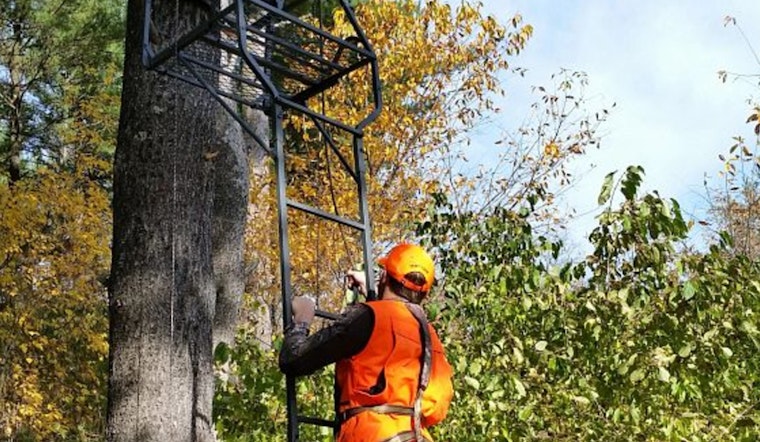
As the crisp autumn air begins to signal the start of deer hunting season, Wisconsin’s Department of Natural Resources (DNR) is issuing a warning to hunters: steer clear of setting up deer stands in ash trees. The verdant giants that once ruled the southern Wisconsin landscape are now largely brittle husks, besieged by the emerald ash borer—an invasive species that has secured a foothold in all of the state's 72 counties. According to the Wisconsin Department of Natural Resources, these trees may not only appear lifeless but are structurally compromised and could fail without warning.
“Dead and dying ash trees are structurally weaker than healthy trees, so they are not safe places to put deer stands,” explained Bill McNee, Wisconsin Department of Natural Resources Forest Health Specialist. With the capacity to almost imperceptibly succumb to the ash borer, even trees that seem robust might easily snap or unexpectedly shed hefty limbs. Hunters are advised to diligently investigate alternate trees for their stands, as a means to mitigate undue risk.
The Wisconsin Department of Natural Resources admonishment is based on safety as much as it is about conservation. Tree stand incidents sit atop the chart as the foremost cause of severe injuries among deer hunters—a statistic that underscores the need for adherence to established safety protocols. Hunters are urged consistently to wear full-body harnesses, maintain three points of contact when ascending or descending stands, and utilize a haul line for their gear. By rigorously following these steps, hunters can better ensure their safety in the wild.
Identifying an ash tree might not be immediately intuitive for some, which is why the Wisconsin Department of Natural Resources has provided a resource-packed webpage. Ash trees are distinguished by their opposite branching pattern, where two branches emerge directly across from one another, and their compound leaves that typically have 5-11 leaflets. This knowledge empowers hunters to decisively choose the correct trees for stand placement, ultimately working to preserve their well-being.
Beyond personal safety, there's also an ecological plea from the Wisconsin Department of Natural Resources for hunters to act as stewards of the land. Bringing firewood into different regions poses a threat of unwittingly transporting pests or diseases, potentially wreaking havoc on other ecosystems. By acquiring firewood near the site it will be burned, or opting for certified, pest-free options, hunters can play a pivotal role in preventing the spread of harmful agents like the emerald ash borer or oak wilt.



