

























































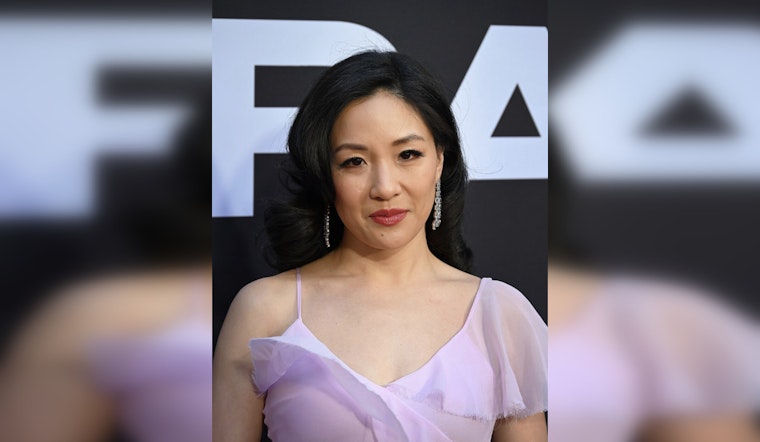
The casting controversy of Broadway's musical Maybe Happy Ending continues to spark debate, with actress Constance Wu expressing her disappointment in actor Andrew Barth Feldman's role in the production. Wu took to Instagram, revealing that she had an in-depth conversation with Feldman about Asian American representation, and while initially left hopeful, a recent voice memo from him changed her perception, she detailed an exchange that left her "so disappointed in him" and "feeling pretty discouraged." This sentiment is reflected in her Instagram post from Wednesday, where she states, "It's hard to keep speaking up when it feels like no one is listening anymore in this new era. It's exhausting and increasingly lonely," as reported by PEOPLE.
The show's producers faced backlash earlier in the summer when they announced that Feldman, who is white, would be taking on a role that had been closely associated with Korean culture and played by actors of Asian descent, including Tony winner Darren Criss. Feldman's casting led to criticisms of whitewashing and according to NBC New York, renowned actor BD Wong has been vocally leading the charge, saying the decision "totally mocks a marginalized community’s struggle for opportunities."
Despite the conversation between Wu and Feldman, details of his voice memo to Wu were not disclosed, but its content contributed to Wu's disappointment, her Instagram post revealed the discord, Wu also lamented the silence from behind the scenes at Maybe Happy Ending, indicating that the controversial casting decisions might have been made in hopes that the issue would eventually dissipate, "A dozen or so folks bts at @maybehappyending have remained silent perhaps in the hopes that this will all fade away and you know what? It has," Wu pointed out, further noting, "Your plan is working, guys - I heard your box office doing great," as per report by PEOPLE.
Wu also referenced support for a petition and essay by Wong, demanding acknowledgment from the producers regarding this casting choice, as the essay, shared on August 10, garnered over 2,400 signatures expressing a collective disappointment "taken as a hard slap in the face of both the Asian actor community and the Asian audience," Wong's remarks highlight an ongoing issue in the entertainment industry, according to the Instagram post cited by PEOPLE. In her own words, Wu urged Feldman and the production team to recognize their responsibilities, emphasizing that it is up to them to either maintain or challenge the status quo, and concluded with a question asking, "what are you choosing to do with it?"
While Feldman and the production’s representatives have not responded to requests for comment, the creators of Maybe Happy Ending, Hue Park and Will Aronson, issued a public statement addressing the controversy. They noted that the characters were created to explore universal human themes and did not have Korean names, even in the original Korean version of the musical. The statement, shared on Instagram, acknowledged the significance of representation for members of the AAPI community and referenced the ongoing conversation about visibility, human connection, and diversity in the performing arts, as PEOPLE reported.





