

























































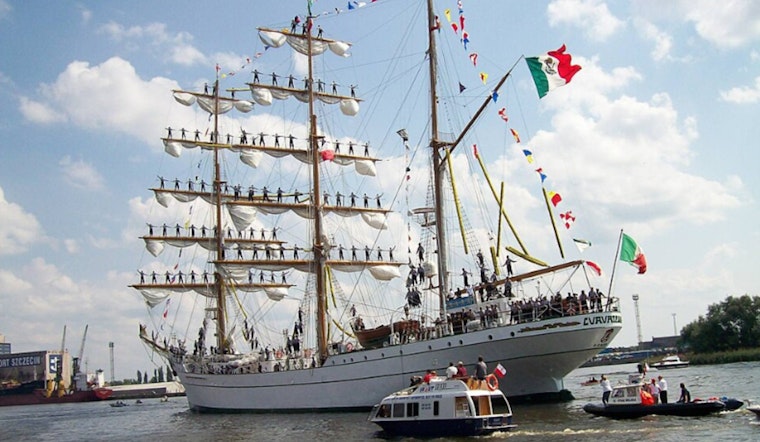
The Mexican Navy ship Cuauhtémoc, which was involved in a fatal collision with the Brooklyn Bridge earlier this year, has embarked on its first sea trial post-repairs. According to a New York Post report, the trial began last Wednesday around 2 p.m. from Caddell Dry Dock & Repair Co. The ship tested its major repairs in the waters near New York City and returned last Saturday.
During the incident in May, which is still under investigation, two lost their lives and nearly two dozen were injured when the ship collided with the bridge. The trial serves as an "operational test to make sure all the equipment is working as it should be," Sal Morino, Caddell’s vice president, told the New York Post. The repairs, tallying some $500,000, included mending three severed masts and inspecting the ship's running gear.
Before departing for Mexico, the Cuauhtémoc is now anchored by the Intrepid, and New Yorkers are invited to take a tour and learn about the vessel and those killed in May's accident, as per a ABC 7 New York article. The Mexican flag flies over Pier 86, where visitors have the chance to view and engage with this symbol of pride and history.
Edith Campos, who witnessed the May accident, commented on the significance of the ship's return and its somber context. "This was for me so interesting to see. And I was able to go inside and talk to them. Those people that was there, the Marines and all of them," Campos said, according to the ABC 7 New York interview. The Cuauhtémoc, after its stay and repairs, aims to leave Pier 86 next week for a triumphant return to Mexican waters.
If the sea trial proves successful, the ship could be part of the flotilla of Class A international tall ships slated to return next summer for the US's 250th birthday celebrations. While nothing has been confirmed, Sail4th 250 President Chris O’Brien expressed hope for the ship's return in a prior statement to the New York Post. During the tragic collision in May, cadets were "manning the masts," which is a traditional gesture of respect as a ship enters and departs a port, resulting in the fatal accidents. The National Transportation Safety Board's report clarifies that both the pilots of the 147-foot training vessel and the accompanying tugboat tested negative for substances, with the weather conditions being clear. Still, the inquiry continues to resolve why the ship was inadvertently sailing backwards and gained speed prior to the collision.



