

























































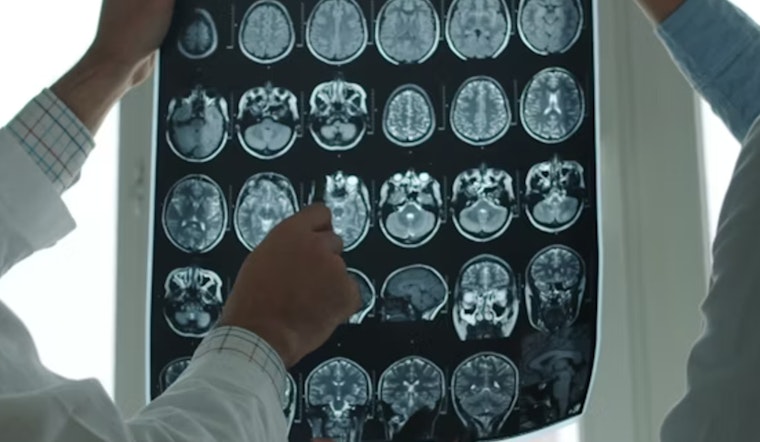
In a leap for clinical research, MIT researchers have created an AI-based system set to shake up how medical images are annotated, a task essential to the study of biomedical images. The new tool, according to MIT News, simplifies the segmentation process by allowing researchers to quickly mark regions of interest using easy interactions like clicking and scribbling. Notably, this new model streamlines what has traditionally been a manual, and quite tedious, process.
Segmentation of biomedical images, such as brain scans, requires accurate outlining of areas like the hippocampus, which, when done manually can drag on—a problem the new AI system, labeled MultiverSeg, is designed to solve. As researchers work with the tool, it requires less and less input, ultimately reducing to no user interaction at all as the AI learns to segment images autonomously. Despite the complexity of the technology, users don't need machine-learning expertise or high-powered computational resources to operate it, allowing even those with minimal experience to efficiently segment imaging datasets.
MultiverSeg stands out as it merges the best elements of interactive and automatic segmentation, drawing on a 'context set' of already segmented images to improve predictions with minimal user input, as per Hallee Wong, a graduate student of electrical engineering and computer science. In a statement obtained by MIT News, Wong revealed the intention behind this innovation, "Our hope is that this system will enable new science by allowing clinical researchers to conduct studies they were prohibited from doing before because of the lack of an efficient tool."
The efficiency of MultiverSeg has been put to the test against current segmentation tools and the results are impressive. By the ninth image, it usually needs just two clicks from the user to achieve more accurate segmentations than models designed specifically for the task at hand. The interactivity of the tool also means users can tweak the AI predictions until desired accuracy is reached. "With MultiverSeg, users can always provide more interactions to refine the AI predictions. This still dramatically accelerates the process because it is usually faster to correct something that exists than to start from scratch," said Wong.
Looking ahead, the research team at MIT, supported by partners like Quanta Computer, Inc. and the National Institutes of Health, aims to test the tool with clinical collaborators and refine it further based on real-world feedback. Future updates may even see MultiverSeg handling 3D biomedical images, potentially becoming a fixture in clinical applications that require precision and finesse, such as radiation treatment planning.



