

























































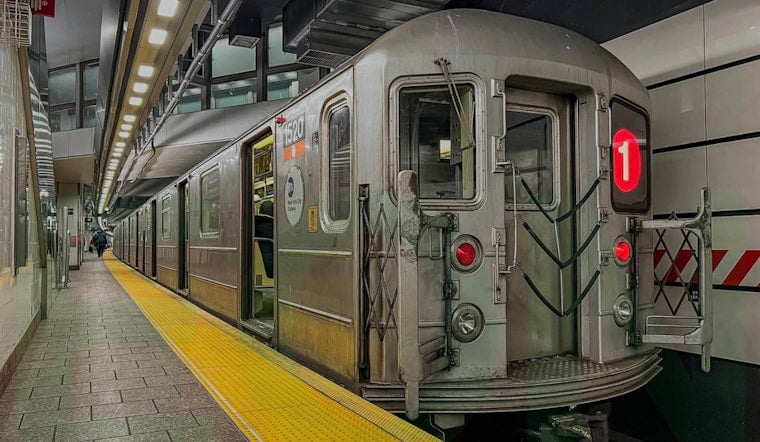
In an effort to address the intense heat that often overwhelms passengers on New York City's subway platforms, the Metropolitan Transportation Authority (MTA) is exploring the use of geothermal cooling technology. As reported by Gothamist, the proposed system would utilize the Earth’s subsurface to redirect excess heat from crowded platforms into cooler underground layers. Last week, the MTA issued a request for information to assess the feasibility of implementing such technology, with a focus on the frequently overheated 167th Street and 181st Street stations on the No. 1 line.
Riders experiencing these extreme conditions highlight the significant discomfort faced during peak summer months, with temperatures reportedly approaching 100 degrees. One commuter, Maimouna Traore, who has hyperhidrosis, a condition that causes excessive sweating, voiced her concerns about the lack of cooling systems. In an interview with Gothamist, she stated, "There should be some kind of AC or some kind of circulation, especially in the summer time," and noted that such changes should have been implemented much earlier.
MTA officials, acknowledging the complexity of retrofitting stations in a densely populated urban environment, are now exploring underground solutions. Speaking to Gothamist, MTA Senior Manager for Climate Sustainability Planning Ricky Li explained the shift in approach: "So instead of essentially looking up, we’re looking down, because we want to remove heat from within the station envelope and if we can’t put it in the outdoor environment, we can theoretically store it in the ground.” The MTA’s request for information also outlines the need for a geothermal system capable of consistently delivering localized cooling during the city’s increasingly hot days, aiming to maintain temperatures between 82 and 85 degrees.
Conventional cooling strategies, like 'air-tempering' systems, present in newer stations such as the 7 line's Hudson Yards station, are less feasible for older stations due to their design and urban location, necessitating inventive approaches. The MTA, which has just seven out of 472 stations equipped with cooling systems, is now confronting a "climate crisis" that requires looking at all renewable sources and unconventional solutions to reduce temperatures, said Kate Slevin, executive vice president at Regional Plan Association, in a statement obtained by THE CITY.
With the increasing heat challenges established by MTA's "Climate Resilience Roadmap"—which predicts a three-fold increase in days exceeding 90 degrees by the 2050s—the adoption of innovative technologies becomes crucial, Eric Wilson, MTA Construction & Development’s senior vice president of climate and land-use strategy, told THE CITY.





