

























































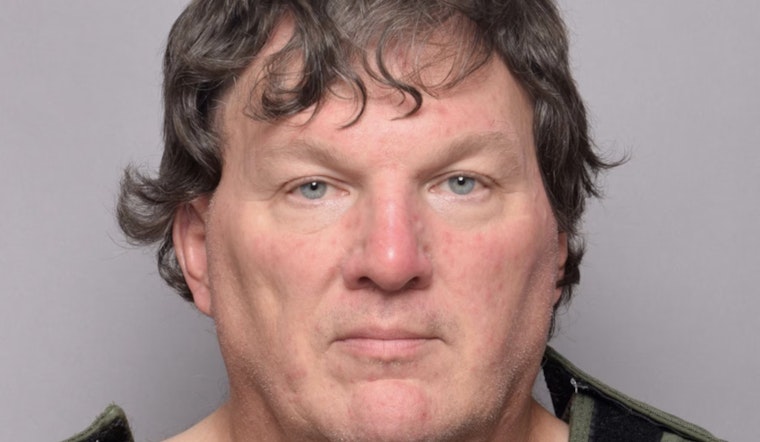
In a landmark decision for New York courts, a judge has ruled that advanced DNA testing can be presented in the trial of Rex Heuermann, the accused Gilgo Beach serial killer. This groundbreaking ruling allows for whole genome sequencing to be used as evidence, a move that could set a precedent for future cases in the state. Whole genome sequencing is capable of extracting DNA from samples that are old, degraded, or of poor quality, such as the hair strands found on a number of the victims associated with the Gilgo Beach case.
The implications of this decision are significant, marking the first time such evidence will be admissible in a New York court. According to CBS News New York, the Suffolk County District Attorney's office has linked Heuermann, his ex-wife, and his adult daughter to hair strands found on six of the seven victims through the use of this technology. The defense has raised concerns, however, challenging the judge's decision on the grounds that the lab conducting the testing, Astrea Forensics, is not licensed in New York, a claim the judge will review on Sept. 23.
The advanced process differs significantly from traditional forensic methods, which typically examine 24 to 27 areas of the DNA. Instead, whole genome sequencing analyzes countless variations in the sequence, providing detailed information that could identify an individual even from a degraded sample. Michael Marciano, director of research for Syracuse University's Forensic and National Security Sciences Institute, explained to CBS News New York the process, "Rather than look at 24 to 27 areas of the DNA, which is what we typically do in forensic cases, we look at thousands, tens of thousands, hundreds of thousands of different variations in the DNA."
Heuermann, a 61-year-old Manhattan architect, stands accused of the deaths of seven women dated back to 1993, based on a series of incidents that saw the remains of multiple people discovered near Gilgo Beach. The defense attorneys for Heuermann have labeled the DNA testing process as "magic" and have criticized the statistical analysis, which leaned on the 1,000 Genomes Project, an open-source database with the full DNA sequence of approximately 2,500 people globally. Yet, the method has been widely used in scientific and medical fields, contributing to significant breakthroughs such as the mapping of the Neanderthal genome, and is slowly making its way into the realm of forensic science according to the reports from The Guardian.
This potential watershed moment in forensic DNA analysis comes as prosecutors also indicated they have plenty of additional evidence in the case against Heuermann, including a document purportedly written by him, internet search activity, his vehicle, and witness testimony, as well as the tell-tale connections made by DNA from a discarded pizza box. Suffolk County District Attorney Ray Tierney, in anticipation of the forthcoming trial, has stated, "We won." Following a series of Frye hearings which evaluated the scientific validity of the DNA evidence, the judge's decision may clear the path for the prosecution to levy the full weight of their evidence against Heuermann when the trial commences, as reported by The Guardian.





