

























































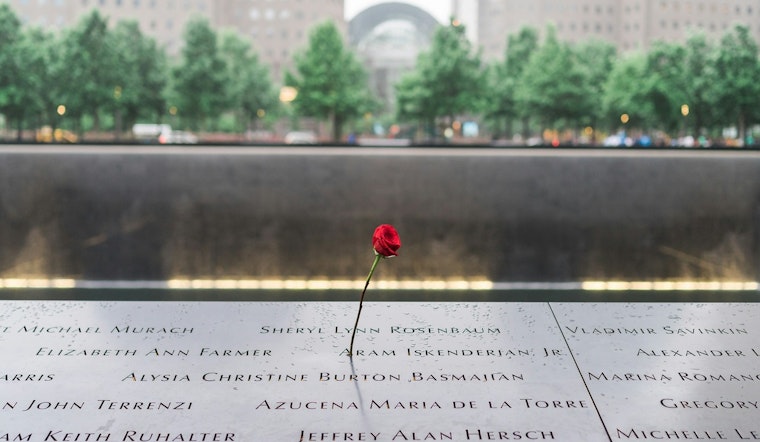
As the calendar marks another anniversary of September 11, the New York City medical examiner's office continues its meticulous mission, now into its 24th year, seeking to bring some measure of closure to the families of the victims with unidentified remains from the terrorist attacks. According to an interview with ABC7NY, Mark Desire, who currently works inside a lab with a team aiming to identify remains of 9/11 victims, describes their commitment: "The families, if it's a first time identification, they're kind of surprised that this process is still going on that we haven't given up." Desire, who narrowly escaped death on that fateful day, accentuates the ongoing efforts, the labs persistence equaled only by the strides in technology that have occurred since 2001.
Despite the passage of years, the chief medical examiner's promise remains sturdy—it's a dedicated march towards identifying every last person lost in the disaster, and as Dr. Jason Graham pointed out to ABC7NY, "This office made a promise to the families immediately following 9/11 that we would do whatever it takes for as long as it takes to identify their loved ones and return them to them." The commitment is underscored by a somber statistic: some 40% of the victims remain unidentified, translating to around 1,100 individuals. Heavily relying on technological advancements, staff at the NYC Office of Chief Medical Examiner navigate the, oftentimes, painstaking process of extracting DNA from the smallest of samples—a pursuit that balances on the razor's edge of present capability and future innovation.
For a deeper look into the forensics, NPR offered insights from the teams at the lab unraveling this DNA conundrum. Mark Desire, assistant director of forensic biology, told NPR, "We just keep going back to those samples where there was no DNA. Now the technology's better and we're able to do things today that even last year we weren't able to do." Desire supervises the intricate process of testing thousands of human remains recovered from the area—efforts that have never ceased despite the relentless challenge of time's havoc on the biological materials.
The determination to fulfill this promise has been fortified with recent successes—three new victims were identified just last month, a tiny but significant victory amid the larger ongoing quest. Each DNA match is a powerful moment, a tangible return from the abyss of uncertainty and, as Monica Iken-Murphy, widow of Michael Iken a bond broker who died in the South Tower, told NPR, "If he does get found one day — and there's hope because we found three [new identifications in August] — I'm going to keep him there,” referring to the 9/11 Memorial & Museum, where she frequently visits to feel a connection to her late husband.





