

























































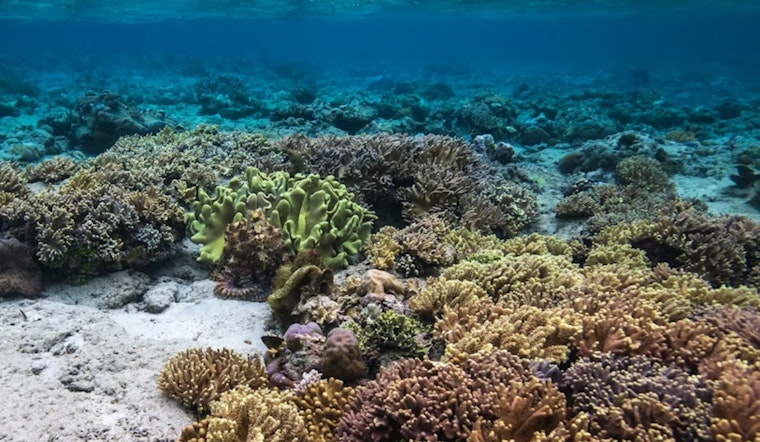
In the face of dire predictions for the world's coral reefs, new findings present a glimmer of adaptation in these ecosystems to the warming seas. Focused on a coral variety from the northern Red Sea named Stylophora pistillata, a team led by Ann Marie Hulver, a former graduate student and postdoctoral scholar in earth sciences at The Ohio State University, has uncovered some capacity for resilience among these organisms. The study, published in the journal Science of the Total Environment, according to the Ohio State University, explored the impact of a six-month exposure to elevated ocean temperatures that simulate future climate change scenarios.
Hulver's team has revealed that while Stylophora pistillata can withstand higher temperatures, the stress of such conditions doesn’t come without consequence. At 27.5 and 30 degrees Celsius — temperatures that are expected to become the new normal by 2050 and 2100, respectively — these corals exhibited a decrease in size, up to 70% smaller than the controls, and increased metabolic demand. "In theory, if corals in the wild at these temperatures are smaller, reefs might not be as diverse and may not be able to support as much marine life," Hulver told Ohio State News. This could, in turn, impact local economies that rely on reefs for tourism, fishing, or as a food source.
However, not all the findings spelled out doom for the reefs. In the early stage of the experiment spanning 11 weeks, the affected corals managed with only minimal impact from the elevated temperatures. It was the prolonged exposure to high heat, rather than short-term elevations, which stunted their growth and escalated their metabolic needs. This nuance in coral response underscores a capability for recovery, at least in the short term, as the specimen later demonstrated some recovery in a cooler environment.
The signs of adaptation were noted when the stressed corals regained some normalcy after spending a month in 25-degree Celsius waters; nevertheless, these corals exhibited a darker pigmentation compared to those that had not been exposed to the warmer conditions, a detail highlighted by the Ohio State research team. As ocean temperatures continue to climb, potentially rising by 3 degrees Celsius by 2100, this data adds a layer of complexity to how we predict coral reefs’ survival amid climate change. While the researchers assert that expectations around coral adaptability must be tempered with the realities of ongoing climatic shifts, the resilience demonstrated by Stylophora pistillata does offer a touchstone for hope.



