

























































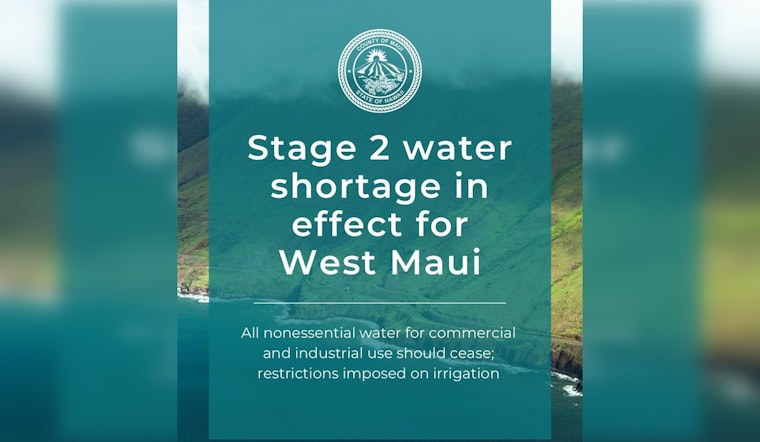
Residents in West Maui are facing a serious escalation in their ongoing water shortage as officials have announced the implementation of a Stage 2 water shortage, calling for a significant clampdown on nonessential water use in the region. According to a recent declaration by the County of Maui's Department of Water Supply, the service area—which includes Lahaina, Kāʻaanapali, Kahana, Māhinahina, Nāpili-Honokowai, and Honokōhau—must now adhere to stringent water use restrictions and schedules due to prolonged dry weather and a severe lack of rainfall triggering an upgrade from the previous Stage 1 water shortage status that had been in effect since June 30, 2022.
The official statement from Maui County specifies, "All nonessential water use for commercial and industrial use should cease," outlining that irrigation is now only permitted for one day per week, depending on the address number or type of establishment. For residential addresses, even-numbered properties can water on Wednesdays and odd-numbered on Thursdays. Commercial facilities and multifamilies with even addresses can irrigate on Friday, while odd addresses have Saturday. Detailed schedules and the allowance of drip irrigation for gardens for an extra day aim to balance water saving with the maintenance of vital flora.
In addition to irrigation restrictions, personal washing of vehicles is now prohibited, and construction sites can no longer use potable water from temporary meters. Moreover, water customers found in violation of these rules face substantial penalties, with potential fines of $500 and escalated actions such as removal of the water meter for repeated noncompliance. The need for strict adherence is driven by significant factors: the Honōkohau Stream flow is currently low, the Māhinahina Water Treatment Facility reports no inflow, and the U.S. Drought Monitor predicts D-2 severe drought conditions.
Residents have also been urged to repair any leaks or breaks within three days of notice to the extent feasible, as the department stresses the importance of every drop saved. Agricultural customers are not exempt and are required to cut their water consumption by 20%. As the struggle with insufficient water levels continues, the Department of Water Supply assures that it will closely monitor the balance of supply and demand, along with weather forecasts, to determine when the water restrictions can be lifted or if further intensification to a Stage 3 is necessary.



