

























































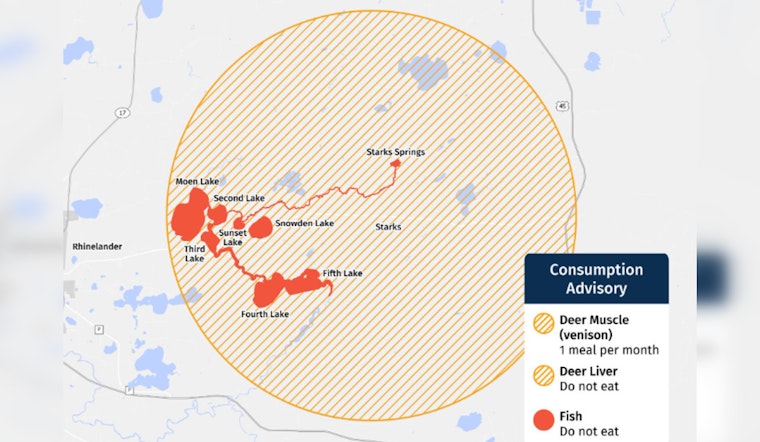
Wisconsin's environmental and health authorities have issued a stark warning to local anglers and hunters regarding the consumption of fish and deer owing to PFAS contamination. The Wisconsin Department of Natural Resources and the Department of Health Services have jointly put forth advisories for the Town of Stella and the surrounding waterbodies in Oneida County after finding elevated levels of these hazardous chemicals in local wildlife.
Specifically, all species of fish from the Moen Chain of Lakes—which encompasses Moen Lake, Second Lake, Third Lake, Fourth Lake, Fifth Lake—Sunset Lake, Starks Creek, and Snowden Lake are at the center of a "Do Not Eat" advisory. Elevated levels of perfluorooctane sulfonate, a particularly concerning type of PFAS, were present in all fish sample tissues tested from these areas. According to a statement from the Wisconsin Department of Natural Resources, an updated advisory reflects the latest guidelines backed by recent scientific insights into perfluorooctane sulfonate.
For deer hunters, the consumption guidance within a 5-mile radius of the Town of Stella's town hall has also shifted dramatically. Whereas the muscle tissue of harvested deer—venison—is advised at a consumption rate of one meal per month, consumption of deer liver is expressly discouraged with a "Do Not Eat" directive. Contributing to these advisories are the tests conducted on 11 deer from the area, as deer sampled by hunters during the 2024 season showed elevated perfluorooctane sulfonate levels, especially in liver tissue, which naturally accumulates such compounds, as stated by the Wisconsin Department of Natural Resources.
These advisories aim to safeguard area residents from the risks posed by perfluorooctane sulfonate, including their propensity for accumulation within the human body. The Wisconsin Department of Natural Resources and Department of Health Services highlight the significance of following these new guidelines, as perfluorooctane sulfonate exposure is tied to various health concerns. The comprehensive advisories are compiled in the Wisconsin Department of Natural Resources "Choose Wisely" booklet, detailing safe fish consumption practices—and additional information regarding venison can be found on the Wisconsin Department of Natural Resources Safely Eating Venison webpage.
Perfluorooctane sulfonate are man-made chemicals used in many everyday products like non-stick pans and firefighting foam. They don’t break down easily, so they can build up in the environment over time. perfluorooctane sulfonate can get into soil and water through spills, wastewater, and firefighting activities. Health experts warn that perfluorooctane sulfonate can harm the environment and may pose risks to human health.





