

























































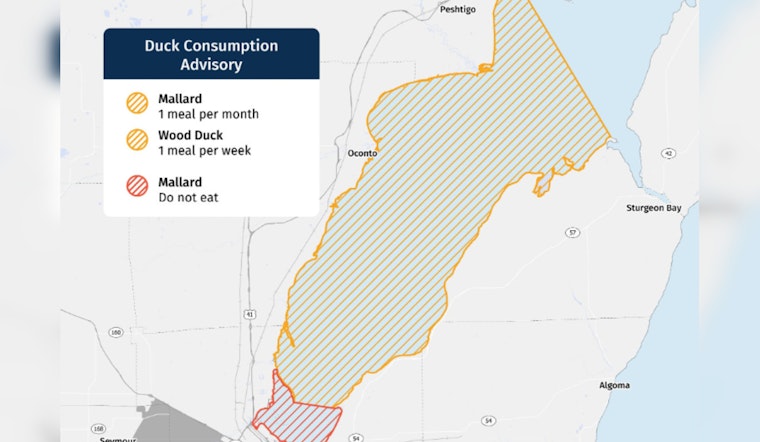
Wisconsin's Department of Natural Resources (DNR) along with the Department of Health Services (DHS), issued a consumption advisory for ducks harvested on Green Bay, pivoting on a rather disconcerting revelation – elevated levels of toxic chemicals known as PFAS. The recent directive underscores a stricter warning for mallards from Lower Green Bay, where authorities are urging hunters, "Do Not Eat" the birds due to high contamination risks. On the broader scope of the bay, the agencies suggest limiting mallard and wood duck consumption to 1 meal per month and 1 meal per week, respectively, as reported in a release accessible at the Wisconsin Department of Natural Resources official site.
Unseen, yet penetrating, the substances dubbed PFAS — short for per- and polyfluoroalkyl substances — have made their unwelcome imprint on the environment and subsequently the local wildlife, prompting both the Wisconsin Department of Natural Resources, and DHS to act in the public's interest. These human-made chemicals, carrying with them a variety of health concerns, have long been used in consumer goods and industrial applications only to increasingly surface in ecosystems around the globe. Duck breast muscle samples were collected for testing between July and August, ensuring they reflected the local breeding populations. The results, as indicated by this recent study, pointed to heightened concerns predominantly for ducks dwelling in lower Green Bay.
The divergence in PFAS levels, specifically perfluorooctane sulfonate (PFOS) detected between lower Green Bay and its northern counterpart, stems from an array of pollution sources. These chemical compounds, often associated with products like non-stick cookware and firefighting foams, have found avenues into water systems through spills, wastewater discharges, and foam usage. The realization of this contamination has cascading impacts: from immediate public health advisories to long-term environmental concerns, signaling a need for vigilant consumption practices, especially when it comes to local wildlife, as reported by the Wisconsin Department of Natural Resources.
The Wisconsin Department of Natural Resources Consumption Advisories and PFAS webpage is an important resource for people in the state. It provides up-to-date information to help them stay safe when eating fish and other wildlife. This shows the agency’s commitment to protecting public health and being transparent. PFAS chemicals, which are hard to detect, can build up in the environment and enter the food chain. Eating contaminated wildlife can lead to health problems like higher cholesterol and weaker immune systems.





