

























































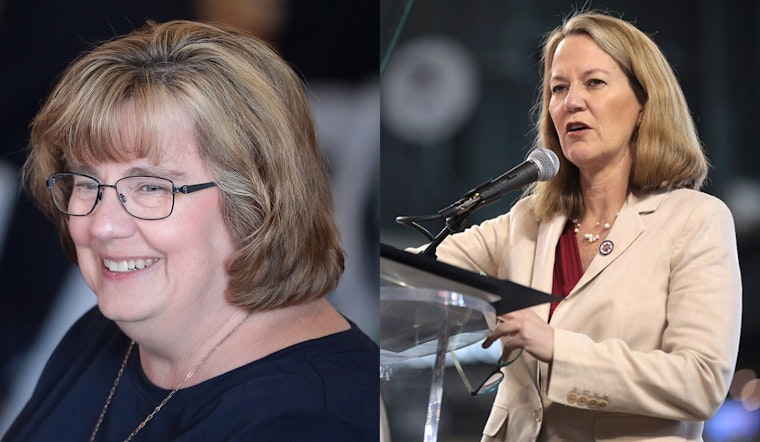
In a rare display of bipartisan agreement, Arizona's top prosecutors are combining forces to challenge a state law that they say could impede their ability to carry out justice. Maricopa County Attorney Rachel Mitchell and Attorney General Kris Mayes, a Republican and Democrat, respectively, are setting aside party differences to contest the constitutionality of Arizona’s anti-SLAPP statute—a measure designed originally to shield citizens against lawsuits that could discourage or penalize free speech.
The law's expansion in 2022 to include criminal cases is the point of contention for Mitchell and Mayes. It has granted defendants the right to potentially avoid criminal charges if they can prove they were targeted for their speech-related activities. While the intent was to strengthen First Amendment protections, these legal eagles argue that the revision has swung the pendulum too far, threatening to improperly involve judges in prosecutorial decision-making, and even possibly requiring prosecutors to testify about their handling of cases—something Mitchell is currently trying to avoid due to involvement with last year's ASU pro-Palestine protest case.
Mitchell's office has argued that the anti-SLAPP law is a breach of several legal tenets, including separation of powers and Arizona's Victims' Bill of Rights. As reported by Yahoo News, the law fails "to acknowledge victims" and is criticized for being "too vague". The challenge has brought up questions about which legal entities will step forward to defend the law, a role typically filled by the Attorney General's office.
However, Mayes, the current Attorney General, has broken tradition by publicly supporting the review of the law—a move that has unfortunately opened the door to potentially having the entire statute overturned. According to a statement obtained by ABC15, Mayes' office deemed the law "seriously flawed" and worried it might have "sweeping consequences for criminal prosecutions in Arizona." Notwithstanding these concerns about the statute’s implications, both have separately filed court actions, denoting that their shared stance does not imply a coalescing of their legal strategies.
Proponents of the law argue that it serves an important role in protecting the spirit of the First Amendment by preventing the abuse of the legal system against those practicing their rights. However, these developments have put the state at the center of a pivotal legal dispute that will test the balance between free speech and the mechanisms of criminal justice in Arizona. With the courts yet to decide on the language and reach of the anti-SLAPP law, many will be watching closely to see how this alliance between two seemingly opposite poles of the political spectrum will play out in their advocacy against a law they deem to be too overreaching.





.jpg)