

























































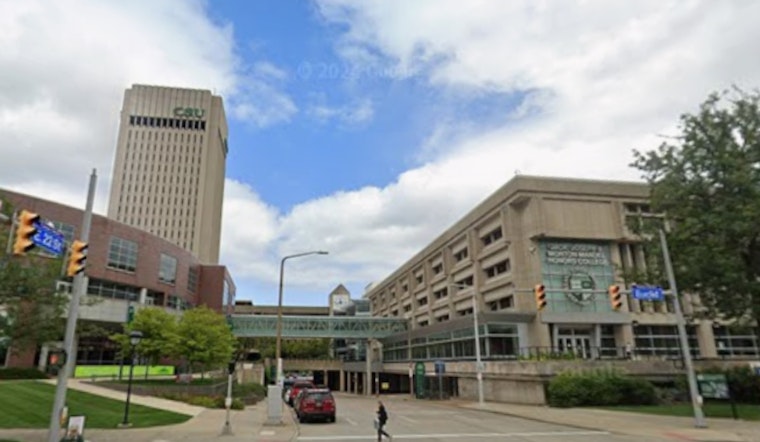
Dr. Hongkai Yu of Cleveland State University is setting the stage for a more fruitful future. Teaming up with researchers from the University of Kentucky, he is embarking on a mission to transform greenhouse agriculture through the eyes of technology. With a hefty National Science Foundation grant of nearly $1.2 million, their project aims to precisely and efficiently enhance tomato production. This innovative endeavor, titled “An Autonomous Robotic System for Precision and High-Throughput Tomato Phenotyping in Large-Scale Greenhouses,” according to Cleveland State University News, promises to bring a new level of sophistication to the farming industry.
The work involves designing sophisticated computer vision and AI algorithms that promise to more accurately identify and assess the phenotypes – characteristics like fruit size, weight, and the number of fruits – using camera imagery. By doing so, not only are they expected to significantly improve crop yields, but also to simultaneously create a safer working environment by reducing the hazards traditionally facing greenhouse workers. The research could potentially revolutionize how we approach and understand plant cultivation within the controlled chaos of a greenhouse environment.
Operating from the helm of the Cleveland Vision & AI Lab, Dr. Yu and his students are no strangers to breakthroughs in AI and computer vision. It was quite a notch in their belt when the lab published its first paper in the "Computer Vision and Pattern Recognition" (CVPR) journal, an accomplishment that marked a significant milestone for the institution. This provides a solid foundation for the team's current greenhouse-focused efforts.
The team's previous work includes exploring the night’s darkest hours to illuminate paths for autonomous vehicles. Last year, the CSU PhD students Jinlong Li, Baolu Li, Zhengzhong Tu, Xinyu Liu, Qing Guo, Felix Juefei-Xu, Runsheng Xu, and Dr. Yu himself authored a paper, "Light the Night: A Multi-Condition Diffusion Framework for Unpaired Low-Light Enhancement in Autonomous Driving", according to CSU News, presented at the prestigious 2024 CVPR conference. It's these same high-caliber minds that are set to apply their expertise to sustainably boost the agriculture sector.
As the team delves deep into the greenhouse world, we're keeping a watchful eye on how their work unfolds. With the ability to smartly interface with the living ecosystem of plants in a controlled environment, this venture could well represent a significant leap in how we grow our food, underscoring the pivotal role of smart technology in the resilience of agriculture. One can only imagine the potential ripple effects on the food supply chain and sustainability efforts worldwide.





