

























































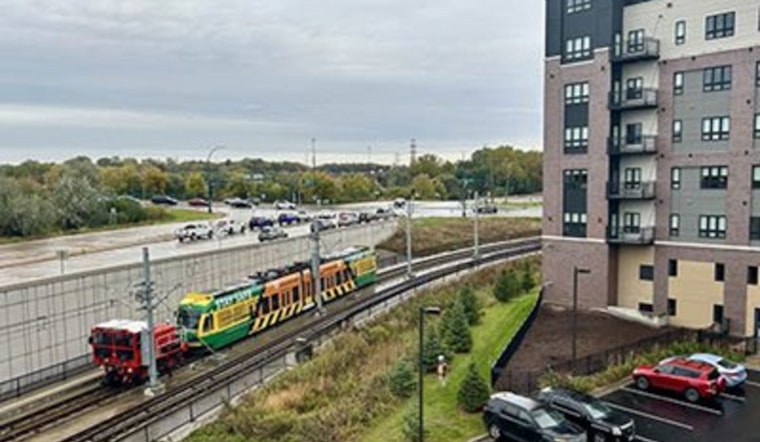
The tracks of the METRO Green Line Extension have seen their first trains, a harbinger of the 2027 full-service launch, as reported by the Met Council. Stretching for 14.5 miles, this extension promises to seamlessly connect downtown Minneapolis's Target Field to Eden Prairie, with civil construction now nearing completion at 95%. In preparation for the anticipated passenger service, a critical phase of track, signal, and systems testing is now to begin, a process that will span until the launch.
The economic impact along the corridor is evident with a reported $3.1 billion sparking new development, inclusive of housing, retail, and entertainment projects—tangible proof of the transformative nature of such infrastructural investments. According to Met Council Interim Chair Deb Barber, "Projects like the METRO Green Line Extension are smart investments in our region's future." She adds, the transit projects, though making up a mere 2% of taxable property, are responsible for generating a hefty 20% of property tax revenue in the region.
Commissioner Marion Greene of Hennepin County hailed the light rail projects for their critical role in enhancing economic growth and environmental sustainability, stating, "They will connect generations of people and businesses to opportunities to build wealth and stability." In an interview with the Met Council, Greene underscored the significance of light rail as an economical and environmentally forward mode of transportation, also stressing its increasing necessity amid the rising costs and ecological burden of car ownership.
Each city situated along the extension's path has witnessed considerable growth directly attributable to the project. Eden Prairie has seen $560 million in new developments, including residential, commercial, and industrial projects. Similarly, Minnetonka, Hopkins, St. Louis Park, and Minneapolis have all reported hundreds of millions in development, as outlined by the Met Council. The existence of this much infrastructural change not only acknowledges but also sets the stage for the Green Line Extension to serve as the backbone for future development ventures.
The METRO system has marked 2025 as a year of significant expansion, with the Green Line Extension joining the ranks of the Gold and B lines, which launched earlier in the year, and the E Line which is set to begin by the year's end. Emphasizing the foundational role of transit, Deb Barber stated that it "gives everyone access to jobs, education, healthcare, and community—whether they own a car or not." With the upcoming 16 stations across prominent communities, the METRO Green Line Extension, as described, is poised to significantly elevate transportation options within the southwest metro area, knitting a network that binds the corners of a growing region.



