

























































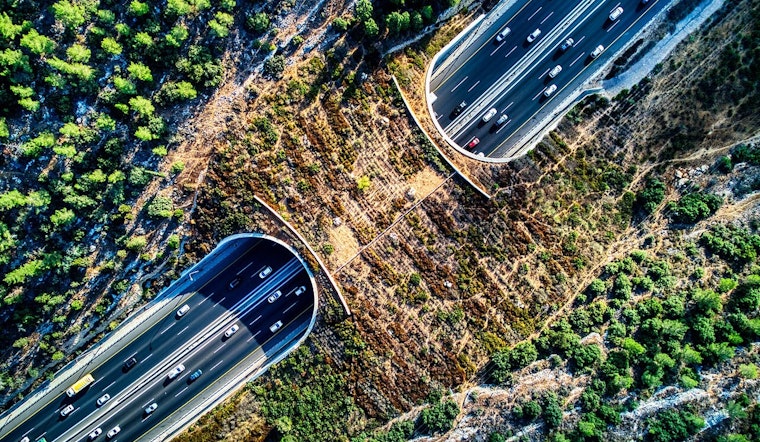
The Wallis Annenberg Wildlife Crossing, poised to be the world's largest bridge of its kind, has officially begun its greening phase. According to KTLA, the first of roughly 5,000 native plants were introduced to the structure this Tuesday, marking a momentous step in the project's progress. The plants, sourced within a five-mile radius of the crossing, are expected to provide a much-needed environmental boost for the wildlife in the area.
The crossing's completion, originally projected for this year, has obviously been delayed due to unforeseen weather events but is now expected to finish in 2026. As reported by LAist, the remaining native plants will continue to be installed over the coming months. These plants include a variety of species like narrowleaf milkweed, purple sage, and California aster, all vital for the local ecosystem and various wildlife species that range from monarch butterflies to hummingbirds and bees.
While speaking with LAist, Robert Rock, president of Rock Design Associates, emphasized the careful design of the soil and the ecosystem: "We're designing all the way from those microbial components all the way up to the apex predator." The project has seen collaboration from scientists, biologists, and engineers, all to ensure the crossing fosters a suitable habitat for the native wildlife.
The project owes its existence to a significant extent to philanthropy, with its late namesake, Wallis Annenberg. Crews are also making progress on another construction phase stretching over Agoura Road. This addition has required a monumental collaborative effort, as KTLA reports, which includes burying high-voltage power lines and rerouting various utilities, pointing to how complex and extensive the project truly is.
Once fully realized, the overpass, spanning 210 feet, will be a thoroughfare for a swathe of species such as mountain lions, mule deer, and bobcats, connecting the Santa Monica Mountains with the Simi Hills. As detailed by Secret Los Angeles, this natural bridge is expected to significantly improve traffic safety for both drivers and wildlife, easing movement for animals that have long been hindered by one of the busiest freeways in the United States.





