

























































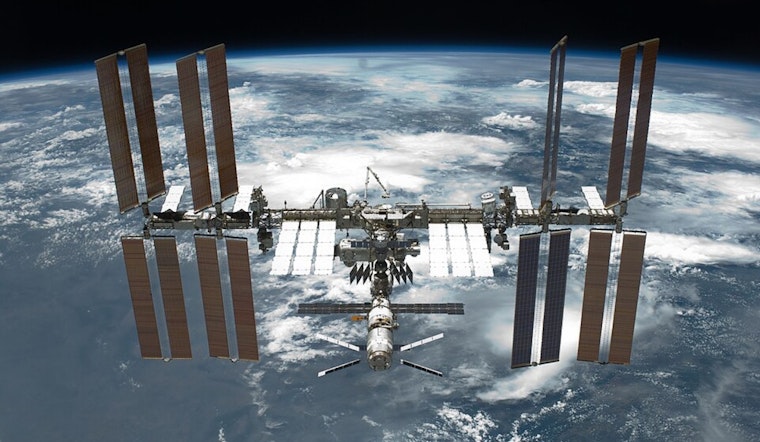
The International Space Station, a monument of international cooperation and scientific achievement, is scheduled for a controlled descent into the ocean come 2030. This decision marks the closure of a chapter in which humanity has maintained an unbroken presence in low-Earth orbit since November 2000, as reported by OSU News. The ISS, a joint venture among nations including the United States, Europe, Canada, Japan, and Russia, has facilitated breakthroughs in various scientific realms.
Reflecting on the impending end of the ISS, an aerospace engineer with 30 years of experience and a tenure of 17 years within NASA shared, "It will be hard for me to see the ISS come to an end." This sentiment echoes a community's acknowledgment of the station's role in significant advancements in science and technology. Since its initial module was sent to space in 1998, the ISS has been the cradle of more than 4,000 experiments generating upwards of 4,400 research papers. These studies have covered ground with thunderstorms, improved cancer drug crystallization, and dabbled in growing artificial retinas, as per information obtained by OSU News.
The ISS has served not only as a home away from home for international astronauts but also as a unique laboratory. Its environment, boasting qualities like low gravity and extreme temperatures, has been instrumental in advancing our understanding across a multitude of scientific domains. This legacy includes enhancing Earth science and paving the way for further space exploration, which has been invaluable for ongoing science on Earth and beyond.
As we approach the era of commercial space stations, the legacy of the ISS is undeniable. It has provided a test bed for experiments in physics, chemistry, and biology, offering insights into the behavior of materials and life under conditions not replicable on Earth. According to the same aerospace engineer from earlier, astronauts aboard this remarkable facility have influenced everything from the sequencing of DNA in orbit to the processing of ultrapure optical fibers, as discussed in the thousands of peer-reviewed articles born out of its existence. The space station, being an expansive collaborative effort, exemplifies the potential of international partnerships in conquering challenges posed by the frontier of space.





