

























































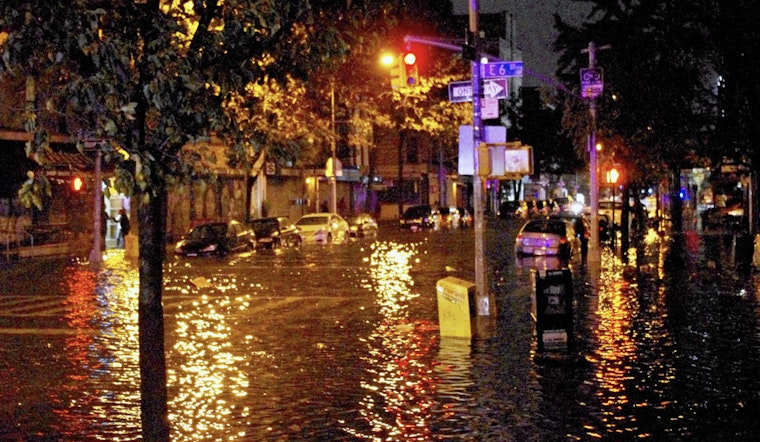
New York City residents are grappling with the aftermath of a storm that has set new rainfall records and caused extensive flooding throughout the city. According to CBS News, Central Park received 1.83 inches of rain, surpassing a more than 100-year-old daily record. The event resulted in significant disruption including flooded basements that led to at least two fatalities in Brooklyn and Upper Manhattan, road closures, and damage to transit infrastructure.
The severe weather also affected air travel, with both LaGuardia and Newark airports experiencing record-breaking rainfall of 2.09 inches and 2.04 inches, respectively. Islip and Bridgeport also set new records, with Long Island seeing 2.60 inches of precipitation, and Bridgeport, Connecticut, reporting 2.44 inches. High wind advisories remained in place with gusts predicted to reach speeds of 45-50 mph, causing concerns about further potential for downed trees and power lines. Friday, which marks another First Alert Weather Day, continues to put residents on high alert, as reported by CBS News.
Adding to these reports, PIX11 noted the significant impact on the city's streets and public transit system, with some subway services being partially suspended. In response to the events on Thursday, New Yorkers took to the streets to mitigate the effects of the storm by unclogging sewers, and in Queens, residents were left facing property damage with trees toppling onto vehicles.
In an interview with CBS News, Department of Environmental Protection Commissioner Rohit Aggarwall stated, "We all know that climate change has brought us these crazy rain storms that our infrastructure was never designed to deal with. The four most intense storms in New York City's history have taken place in the last four years." Aggarwall highlighted the strain placed on the city's aging infrastructure, with rain intensities reaching approximately 6 inches per hour, overwhelming a sewer system designed to handle only 1.75 inches per hour. Despite proactive measures to clear the city's 150,000 catch basins ahead of each storm the inundation of leaves and debris continued to pose a formidable challenge.





