

























































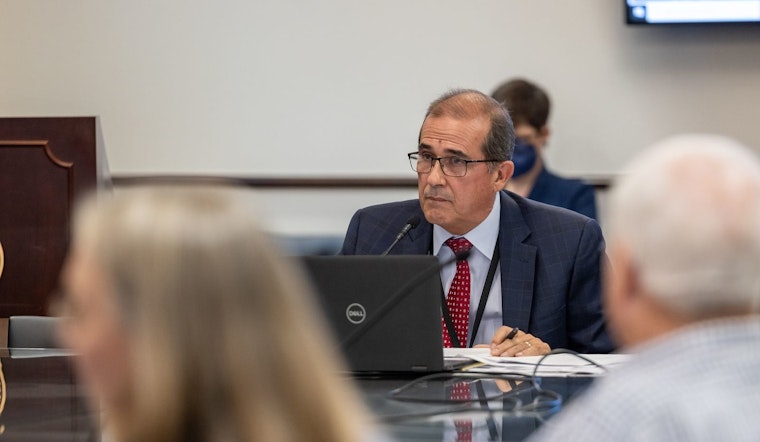
Privacy concerns are at the forefront in Oklahoma as Rep. Tom Gann spearheaded a discussion on automated license plate readers (ALPRs) and their potential overreach yesterday. As reported by the Oklahoma House of Representatives, the legislative study before the House Public Safety Committee examined the balance between law enforcement capabilities and constitutional rights.
Gann, a vocal critic of the perceived misuse of ALPRs, pointed out the erosion of privacy for Oklahoma motorists. "These cameras with the enhanced use of artificial intelligence are monitoring law-abiding citizens in details of their everyday lives," he said as per the Oklahoma House of Representatives, emphasizing that the use of such data extends beyond its legal scope. The initial intent was to identify uninsured motorists within the state, a measure that Gann acknowledged as effective in reducing uninsured driving rates. However, concerns have arisen as ALPRs are increasingly employed in ways that may circumvent Fourth Amendment protections against unreasonable searches and seizures.
Criminal defense attorney and adjunct professor at the University of Tulsa, College of Law, Shena Burgess, highlighted cases where ALPR data was leveraged without proper warrants. She specifically called out the Tulsa Police Department's policies, which claim the cameras enhance their ability to detect illegal activity. "Statute is clear that law enforcement shall not use this for any reason other than to enforce the compulsory insurance law," Burgess told the House. The sentiment was echoed by presenters who insisted on the need for stringent checks and balances.
In alignment with these concerns, investigative journalist and former military officer Marven Goodman shared insights into the deployment of Flock cameras in Guthrie and Edmond. His work with the Oklahoma Department of Transportation contributed to the removal of certain ALPR devices, a move lauded by privacy advocates. Goodman's description of the situation painted a picture of surveillance reaching beyond any specific suspicions of illegal conduct to create a "mosaic effect" of tracking citizen's every movement, which many argue constitutes a violation of privacy and civil liberties.
Adding to the chorus of disapproval, Alasdair Whitney of the Institute for Justice, who is currently involved in a Virginia case addressing similar concerns, stated, "We believe this is not law enforcement but mass surveillance and it's unconstitutional," as mentioned on the Oklahoma House of Representatives. He detailed the accumulation of 41 million images over a 29-day span as a stark example of the extent to which Americans are being monitored.
While all parties involved declared their support for law enforcement and public safety, they simultaneously questioned the integrity of current practices and compliance with Oklahoma's privacy statutes. The study culminated with recommendations for legislative amendments, including explicit repercussions for agencies found to be in violation of existing laws.





