

























































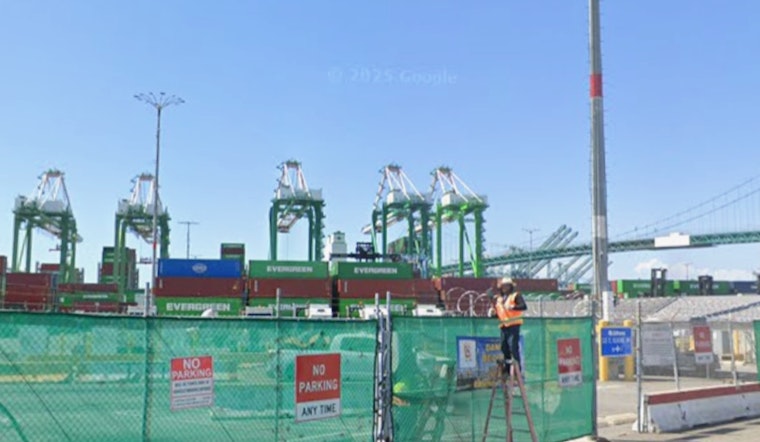
The Port of Los Angeles saw a decline in cargo volume this past September, managing 883,053 Twenty-Foot Equivalent Units (TEUs), which is a 7.5% decrease from the same period last year, according to a report by City News Service. Despite this dip, the Port experienced one of its strongest quarters, with 2.9 million TEUs moved in the third quarter of 2025.
In a statement obtained by Port of Los Angeles News, Executive Director Gene Seroka offered insights into the fluctuating cargo numbers, attributing them to the fickle nature of trade policy. “When sweeping changes were first announced, importers abruptly stopped their orders from China. When those policies were softened and deadlines extended, cargo volume picked up again," Seroka stated. Detailed figures reveal that loaded imports stood at 460,044 TEUs, which is a 7.6% decrease over the previous year, whereas loaded exports were about the same as in 2024. Empty container units also experienced a decline, sitting 10% lower than last year's numbers.
Amid a backdrop of trade policy fluctuations and tariff imposition, the Port has managed to maintain a trace of growth over the year. Nine months into 2025, the figures show the port has handled over 7.8 million TEUs, marking a 3% increase from the same time frame in 2024. Seroka highlighted the commitments of the waterfront workers and logistics partners as pillars of the Port's resilience — stating that about 20% of vessels that call at the Port of Los Angeles are China-made, including some cargo-handling equipment and cranes. Implementing tariffs on these goods, he explained, has a domino effect, ultimately raising prices on a wide range of items.
Retailers and other stakeholders, meanwhile, are grappling with the implications of President Trump's trade policies. After announcing a sizeable 30% tariff on Chinese imports, the president has now proclaimed a “100% across-the-board tariff” on goods from China set to take effect on November 1, 2025. These developments are part of an ongoing series of negotiations and implementations that have seen tariffs rise against several of the US's trading partners. “It's been a whirlwind, to say the least, and I'm not sure there are calm winds ahead just yet," Seroka mentioned to City News Service.
The federal shutdown also continues to feature prominently in conversations about trade and its effect on port operations. Richard DiNucci, a seasoned international trade advisor, described the port's current condition amid the shutdown to City News Service, “Containers still move. Seizures of contraband are still made. Passengers are still moving. Landing rights granted at airports. Cargo moving in express consignment facilities. Nothing really changes.” However, DiNucci also acknowledged the human side of the equation, noting the strain on workforce morale in this unpaid period.





