

























































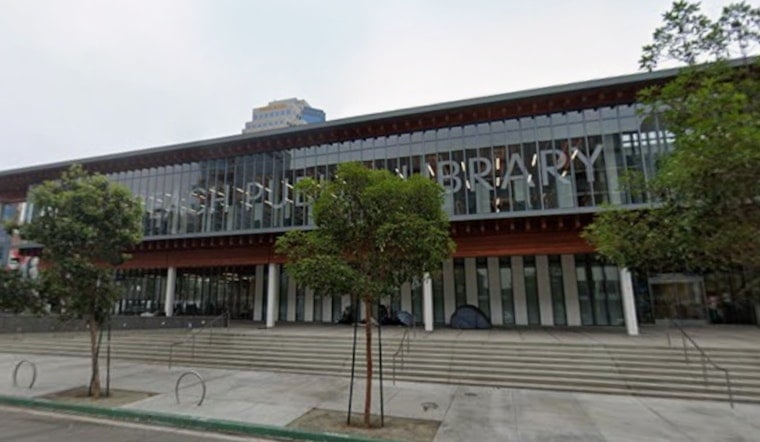
Long Beach officials say the $790,000 wrought-iron fence installed around the Billie Jean King Main Library in March 2026 is doing exactly what it was built to do: keeping the outdoor terrace clear of tents and reducing police and fire calls at the downtown branch. But the city's own Homeless Services Advisory Committee isn't buying it, arguing the money spent fencing off a public plaza could have sheltered homeless residents instead of pushing them elsewhere.
The volunteer committee, which is appointed by the mayor and City Council to advise on homelessness policy, sent a letter to the Long Beach City Council and Mayor Rex Richardson on August 3 criticizing the fence and asking for consultation on similar city projects going forward, according to Long Beach Post. The committee calculated that the $790,000 spent on the barrier could instead have covered shelter for a minimum of ten people for a full year, and warned that the tactic could become more common as the city braces for the pressures of hosting high-profile events tied to the 2028 Olympics.
Before the fence went up, the library's outdoor terrace was often crowded with tents and personal belongings, a condition city officials say created safety hazards for staff and blocked family programming. Long Beach Communications Director Kat Schuster said in an email that the fence has started to save the city money, citing declines in police and fire calls, encampments, and removals of people for rowdy or disruptive behavior at the library. The city says it has saved an estimated $70,000 this fiscal year and has been able to stop daily power-washing around the building.
A Repeat Fix for a Recurring Problem
This isn't the first time Long Beach has fenced off the terrace. The city installed a temporary chain-link barrier there in March 2021 after complaints about illegal camping, a stopgap that preceded this year's permanent installation. The underlying safety concerns date back further still: the Billie Jean King Main Library temporarily shut down in 2022 over staff safety threats, with employees facing physical confrontations and even books thrown at them on the second floor, before it reopened with dedicated police patrols, as CBS News reported at the time.
City leaders later gave themselves more enforcement tools. The Long Beach City Council unanimously approved codified rules of conduct for public libraries in March 2024, allowing officials to impose facility bans of up to a year or pursue misdemeanor charges carrying up to six months in jail for disruptive behavior, according to the Signal Tribune. Those rules have been put to use: the library temporarily banned 28 people from April through July of this year, down from 67 people banned over the same stretch in 2025.
Mayor Richardson has defended the fence as restoring the terrace to what he described as a safe, welcoming area for children, families, and library programming. City leaders followed through on that vision in May, holding a ribbon-cutting for the library's newly redeveloped “Children's Terrace” inside the fenced perimeter, with remarks from Richardson and Councilwoman Mary Zendejas, per the City of Long Beach.
The Numbers Behind the Debate
The advisory committee's pushback lands against a backdrop of worsening homelessness citywide. Long Beach's 2026 Point in Time Count, conducted in January, identified 3,729 people experiencing homelessness citywide, a 3.7 percent increase over the previous year, with more than 2,000 people living on the city's streets and in vehicles. That count also found the city had expanded its shelter network by 164 beds in 2025, pushing more unhoused residents indoors and bringing the unsheltered share of the population to its lowest point in four years, city data show.
Even so, the advisory committee says the math doesn't add up for people still waiting for a bed. Long Beach currently has an average five-month wait for people requesting shelter, meaning fencing off a gathering space does not translate into housing for those displaced from it. The committee argued that city expense reductions are likely to have severe consequences for people experiencing homelessness going forward.
Regional economic pressures help explain why the numbers keep climbing even as the city adds shelter capacity. A 2025 housing study from the University of Southern California's Lusk Center found that nearly 60 percent of renter households in Los Angeles County are rent-burdened, spending more than 30 percent of their income on housing, a factor city officials have cited as a primary driver behind rising homeless numbers, according to reporting from the Signal Tribune.
Budget Pressures Loom Over Library Operations
The fence debate is also unfolding against a tight fiscal backdrop. Long Beach City Manager Tom Modica proposed in July laying off 14 library staff members and ending Monday hours at five branch libraries as part of closing a projected $58.2 million municipal budget deficit for the coming fiscal year, a plan that also proposes eliminating more than 400 city positions overall, per LAist.
The city's homelessness spending has also faced separate scrutiny. Long Beach terminated its contract with its largest emergency shelter provider in April after a performance audit of the Homeless Services Bureau flagged billing and documentation discrepancies in $69 million of homelessness spending over five years, as Hoodline previously reported. That audit prompted a citywide review of how shelter beds are tracked and reported.
The city had broader emergency powers to address homelessness in the recent past. Long Beach declared a local state of emergency on homelessness in January 2023, granting the city manager authority to execute contracts up to $1 million without prior council approval, before ending that emergency in February 2024. The emergency period generated more than $13 million in specialized response spending, according to the City of Long Beach.
For now, the fence stands as a test case for how Long Beach balances public-space management against a homelessness crisis that shelter capacity alone hasn't resolved. The advisory committee's letter makes clear it wants a seat at the table before the city builds anything similar again, particularly with the 2028 Olympics adding new pressure on how downtown public spaces look and function.





