

























































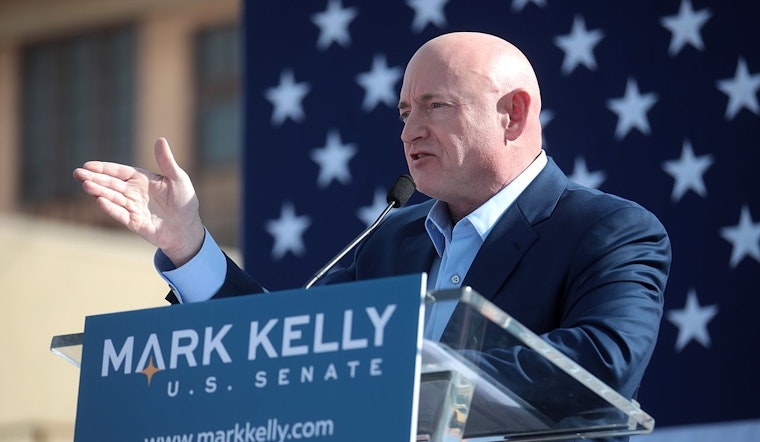
Arizona's military might and housing affordability are set to receive a significant boost, thanks to Senator Mark Kelly's efforts in the National Defense Authorization Act (NDAA). As reported by Kelly's Senate webpage, the Senate recently passed an annual defense bill with bipartisan support, featuring key provisions championed by Kelly himself. The NDAA highlights include preventing cuts to Arizona’s Electronic Proving Ground at Ft. Huachuca, advancing infrastructure at Luke Air Force Base, and facilitating the ROAD to Housing Act aimed at tackling the affordable housing crisis.
In his role as the ranking member of the Senate Armed Services Subcommittee on Airland, Kelly successfully pushed to integrate not just military modernization efforts, but also policy measures to directly assist servicemembers and civilians alike. This includes securing a prohibition on the premature retirement of the A-10 aircraft and authorizing new F-35 jets for the Air Force, with implications for the state's training bases. "This defense bill protects critical missions at Fort Huachuca, upgrades Arizona’s bases, and gives our military the tools and technology needed to stay ahead of our adversaries," Kelly stated. Moreover, the inclusion of the ROAD to Housing Act intends to significantly make progress in addressing the nation’s housing supply.
Protection for Arizona's military installations is crucial not only for state interests but also for national security. The bill facilitates upgrades and supports major infrastructure projects at a range of facilities across Arizona, Kelly's office announced. These initiatives encompass multiple military domains, from airland subcommittee priorities to defense modernization that embraces emergent technologies. One aspect of the NDAA is the requirement for the Air Force to collaborate with academic institutions, solidifying ties between military operations and research education.
Alongside military enhancements, Sen. Kelly had also advocated for policies aiming to have broad civilian implications. The NDAA encompasses provisions such as the SEIZE Act, which expedites the transfer of confiscated weapons to U.S. military partners, and the COUNTER Act, aimed to protect U.S. facilities from security incursions. Kelly further emphasized the importance of the NDAA's comprehensive scope: "It supports servicemembers and their families with pay raises and improved benefits, and it strengthens America’s alliances around the world." This dual focus on military preparedness and civilian support align to present a holistic approach to national policy.
Further demonstrating the NDAA's range, the bill addresses recruiting challenges by mandating military recruiter access to high schools and ensures servicemember transitions into civilian life are smoother by aligning military and civilian health care credentials. In terms of international policy, funding for the Ukraine Security Assistance Initiative and the Taiwan Cooperation Initiative underline America's commitment to global security partnerships, as per the details shared on Kelly's official webpage. The act's allocation for impact aid and the focus on servicemember pay raises showcase the balance between national defense and support for the individuals and families dedicated to America's protection.





.jpg)