

























































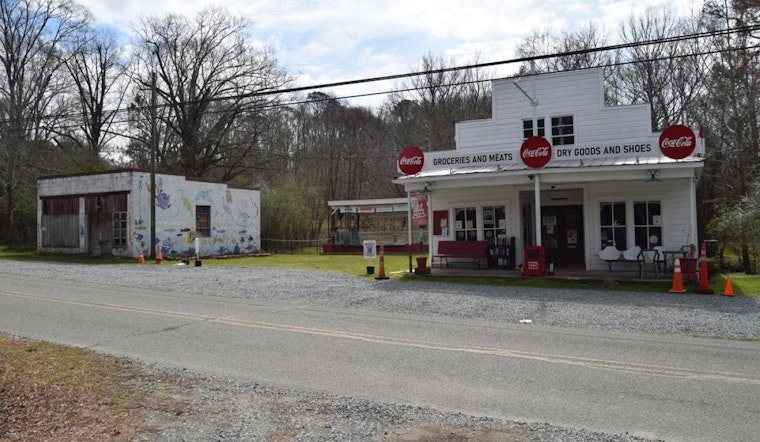
In a move celebrating the state's rich legacy, the North Carolina Department of Natural and Cultural Resources announced the inclusion of seven new historic sites into the National Register of Historic Places. This was affirmed by a recent press release, detailing the latest landmarks to achieve recognition for their contribution to North Carolina's narrative tapestry. The listed locales range from a pivotal hosiery mill in Valdese to a groundbreaking modernist house in Salisbury, each signifying a distinct chapter in the state’s development.
Among the newly registered sites, Pineburr Hosiery Mill in Valdese has been recognized for its significant role in the textile industry, particularly focusing on women's hosiery production. The Bynum Historic District, known for its methodical community planning and vernacular architecture, is another highlight, tracing its roots back to the 1800s. In Salisbury, the John E. and Jean Anne Ferrier Ramsay, Sr. House stands out for its architectural innovation, while the Gladstone Academy in Misenheimer is honored for being an educational cornerstone prior to the establishment of Pfeiffer University. Over in Manteo, the Herbert and Ann Creef, Sr. House exemplifies pre-war modernist architecture, and in Tarboro, the F.D. Wharton House attests to the accomplishments of a pioneering African American Agricultural Extension Agent.
The North Carolina Department of Natural and Cultural Resources emphasized the cultural importance of these places in a statement, citing Secretary Pamela Cashwell, "North Carolina’s historic resources are essential to understanding our state's journey and the people who built it." The designation of these properties does not impose restrictions on owners for maintaining or altering their sites, yet offers federal and state incentives, such as tax credits, to encourage preservation.
The National Register of Historic Places acknowledges the need for preserving historically significant sites across America, and this recent addition bolsters the over 4,391 completed historic rehabilitation projects in North Carolina. Each entry into the register undergoes a thorough review, including an evaluation by the North Carolina National Register Advisory Committee. As part of the State Historic Preservation Office, which is overseen by Deputy Secretary Dr. Darin Waters, these registrations serve not only as a pledge to protect history but as a catalyst for public and private conservation efforts, according to the department's press release.
For those interested in exploring the narratives and architectural details of these landmarks, the nominations for each property can be read in full on the State Historic Preservation Office website.





