

























































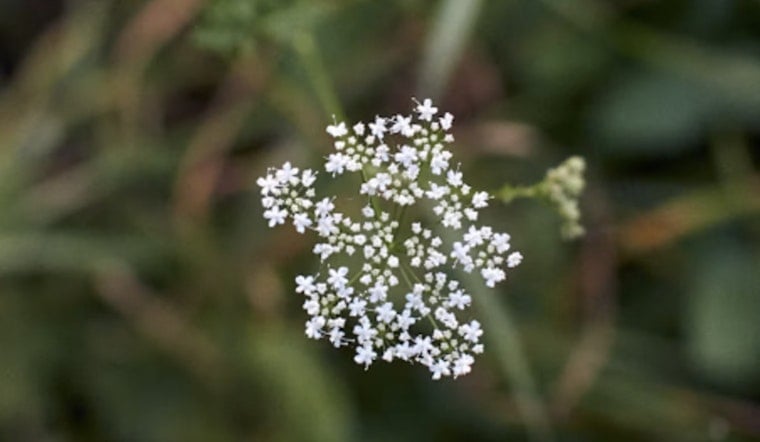
A towering weed capable of killing people, pets and livestock has been confirmed growing in 29 North Carolina counties, including Wake, Durham, Mecklenburg and Orange, thriving unnoticed along roadsides, fences, stream banks and ditches across the state. Poison hemlock, scientifically known as Conium maculatum, contains toxic alkaloids in every part of the plant and can cause death through respiratory failure, with no antidote available once poisoning sets in.
The plant, which is native to Europe and the Mediterranean, has been documented across a wide swath of the state, according to the News & Observer. Confirmed counties include Surry, Stanly, Pamlico, Rowan and Union, along with Guilford, Halifax, Haywood, Henderson and Iredell. It has also turned up in Lee, Martin, Mecklenburg, Mitchell and Orange counties, plus Wake, Wilkes, Wilson and Yancey, and Cabarrus, Catawba, Cleveland, Durham and Franklin. Alamance, Alleghany, Anson, Ashe and Buncombe counties round out the list. The newspaper reports the weed is mostly found in North Carolina's Piedmont region, where it colonizes disturbed soil and displaces native plant species.
A Plant That Mimics Its Harmless Cousins
Part of what makes poison hemlock so dangerous is how easily it blends in. It grows as tall as 10 feet, sports white umbrella-shaped flower clusters, and produces parsley-like leaves, making it easy to confuse with Queen Anne's lace or wild parsnip. The News & Observer notes the plant is also known by a string of other names, including deadly hemlock, poison parsley, poison fool's parsley and spotted parsley.
The most reliable way to tell it apart from lookalikes is the stem. Poison hemlock has hollow stems marked with small purple spots, while Queen Anne's lace features fine hairs along a solid green stem, according to MSU Extension. Foragers and gardeners frequently confuse the toxic weed with edible relatives precisely because both produce the same umbrella-shaped flower clusters, known botanically as umbels.
How Poisoning Happens — and Why It's So Fast
Toxins from poison hemlock can enter the bloodstream through cuts, the eyes or the nose, not just through ingestion, and some people develop a skin rash simply from contact with the plant. Eating it can trigger severe symptoms within just 15 minutes, per Cleveland Clinic. Early signs include sweating, vomiting, dilated pupils, excess salivation and dry mouth, followed by rapid heartbeat, high blood pressure, restlessness and confusion.
In extreme cases, poisoning progresses to muscle weakness, twitches, tremors and seizures, and can ultimately cause muscle paralysis, kidney failure and muscle death. The underlying mechanism is well understood by researchers: the plant's principal toxin, coniine, blocks neuromuscular signal transmission by acting on nicotinic acetylcholine receptors, producing curare-like paralysis that stops the diaphragm and causes death by asphyxiation, according to research published by the National Institutes of Health. Notably, coniine holds a place in chemistry history as the first plant alkaloid ever chemically synthesized in a laboratory, back in 1886.
The plant's toxicity isn't constant, either. Research from the American Institute of Chemists shows the dominant toxin shifts as the plant matures, with gamma-coniceine — eight to ten times more toxic than coniine — dominating during early spring growth before coniine takes over as the plant flowers and sets seed. That means the danger window can actually be more acute earlier in the growing season than many people assume.
Risks to Pets and Farm Animals
Poison hemlock is toxic to dogs and cats, per the ASPCA, and pet ingestion can cause agitation, tremors, drooling, diarrhea, paralysis and death. Livestock face similar dangers, and ingestion is often fatal for farm animals, with poisoning causing trembling, rapid weak pulse, lack of coordination, coma, respiratory paralysis and death. Signs of livestock poisoning usually appear within an hour of ingestion.
The lethal dose for cattle is surprisingly small — roughly 8.5 pounds of fresh plant material can kill a 1,600-pound cow, and unlike many toxic plants, hemlock does not lose its lethality once dried and cured into hay, according to WVU Extension. Livestock typically avoid fresh poison hemlock because of its unpalatable odor, but accidental ingestion happens when pasture options run scarce or contaminated hay ends up in a feed trough. The North Carolina Crop Improvement Association includes poison hemlock on its list of noxious weeds barred from state-certified weed-free forage and mulch, a standard designed to keep the toxic seed bank out of commercial hay and mulch supplies.
The Confusion With Water Hemlock
Poison hemlock is closely related to water hemlock, a plant native to North Carolina that is considered the most poisonous plant in the state, with a scientific name of Cicuta maculata. Water hemlock has poisoned cattle, horses, sheep and swine, and ingestion can be fatal to humans as well. Historical accounts widely credit water hemlock, rather than poison hemlock, with causing the death of the ancient Greek philosopher Socrates, though confusion between the two plants remains common since both belong to the carrot family and contain different toxins — water hemlock's cicutoxin versus poison hemlock's coniine, according to the National Institutes of Health.
How to Remove It Safely
Poison hemlock seeds can persist in soil for years and spread easily via animals, machinery and clothing, which helps explain how a plant this dangerous keeps popping up in new places. Despite that, the News & Observer describes the weed as relatively uncommon overall, even as it continues appearing in new counties across the state. Hoodline previously reported on a similar infestation found along a public bike trail, where an arborist warned residents to steer clear of unidentified plants resembling wild carrot.
People removing the plant should wear gloves, long sleeves and a face mask, then dig out the roots and place the plants in a garbage bag rather than a compost or yard-waste bin, per Cleveland Clinic. Chemical control is also an option: plant-specific herbicides such as dicamba or broad-spectrum herbicides such as glyphosate can be used, though university extension specialists note these are most effective when applied during the plant's first-year rosette stage, since mature, flowering second-year plants respond poorly to chemical treatment. Safety guides from the UC Statewide IPM Program also warn against mowing or burning mature poison hemlock, since cutting can aerosolize toxic sap particles and burning releases hazardous fumes that can be inhaled.
Plant exposures remain one of the most common non-pharmaceutical poisoning causes nationwide, with more than 50,000 cases reported annually and over 80 percent of them involving children under age 6, according to America's Poison Centers. Most pediatric plant exposures are accidental ingestions of small quantities, while the more severe poisonings tend to involve adults who misidentify a plant while foraging — a distinction that underscores why correctly identifying poison hemlock, rather than assuming it's a harmless lookalike, matters so much for anyone spending time along North Carolina's ditches, stream banks and rural roadsides.





