

























































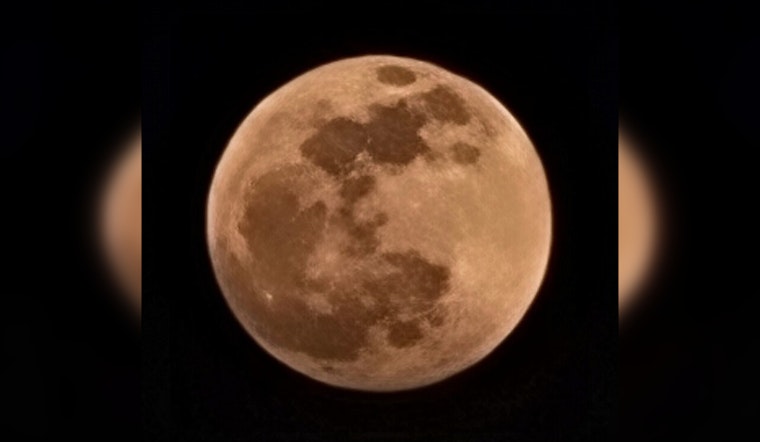
Stargazers are in for a treat as the first supermoon of the year graces the night sky this October. The phenomenon, where the moon appears larger and brighter than usual, occurs when a full moon is closer to Earth on its orbital path. According to CBS News, tonight's supermoon is slated to look up to 14% bigger and 30% brighter compared to the faintest moon of the year.
This year's supermoon series will include two additional events following October's display. Scheduled for November and December, these celestial occurrences are a few among the subtle differences that happen a few times every year. Derrick Pitts, chief astronomer with the Franklin Institute in Philadelphia, told AP News, "It's not really very unusual," referring to the frequency of supermoons.
Noah Petro, project scientist for NASA’s Artemis III mission, reminds us that the moon will still appear nearly full the following night if cloudy skies obscure the view. "The joy of a full moon is that if it’s cloudy in your neighborhood on Monday night on the 6th, you can look Tuesday, and the moon will still look fairly full," he explained in a statement obtained by CNN. October's full moon also bears the traditional name harvest moon, indicative of the time farmers historically gather their crops by moonlight.
Ahead of the Artemis II mission, which will orbit the moon with a crew of veteran astronauts early next year, the timing of October's supermoon is fortuitous. Petro expressed, "What makes the moon coming up on October 6 so special is what we learned (recently) — that Artemis II is launching to the moon early next year," according to a CNN interview. This narrative underscores the moon's role not just as a nocturnal spectacle but also as a destination in mankind's ongoing voyage of space exploration.
In addition to the supermoons, the night sky will offer several meteor showers with the peak activity scheduled throughout the remaining months of the year. Eager skywatchers should mark their calendars for the Orionids in late October, and the Northern Taurids and Leonids in November, among other showers. Keep an eye on the heavens for the Draconids, which will blaze trails across the sky just days after the supermoon, while December will be illuminated by the Geminids and Ursids meteor showers as 2025 winds to a close.




