

























































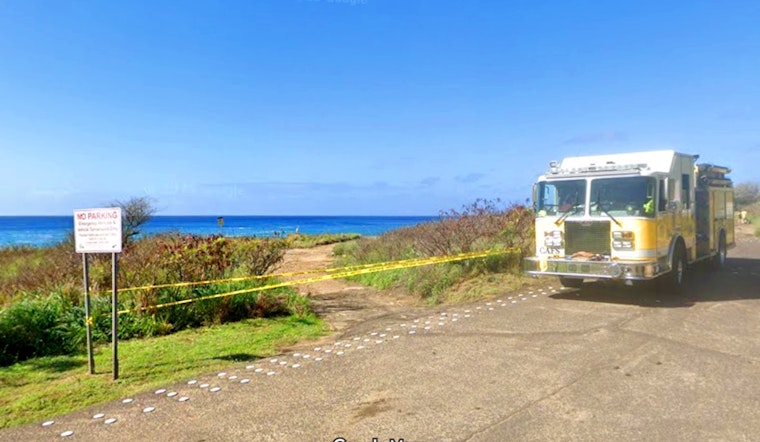
Two Waianae High School seniors fishing off Kaena Point on Saturday morning became the latest tragic casualties of one of Oahu's most deceptively dangerous coastlines. Tony Siufanua and Maikah Hampp-Iriarte, both 17, died after one was swept off the rocks by a wave and the other dove in to help.
The incident occurred around 9:30 a.m. Saturday when the two teenagers were fishing near Yokohama Bay, according to Honolulu Star-Advertiser. When a wave swept one of them into the ocean, the other immediately jumped in to help. Neither returned. After searching for approximately 30 to 40 minutes, according to Hawaii News Now, Honolulu Ocean Safety personnel located the teens and brought them to shore at Yokohama Bay, where CPR was performed.
Both were transported to a hospital in critical condition but later died. The city Medical Examiner's Office identified them as Maikah Hampp-Iriarte and Tony Siufanua, both of Waianae, as reported by Honolulu Star-Advertiser. The cause and manner of their deaths are pending, and there were no signs of suspicious activity or foul play.
A Community Mourns Its Own
By Monday night, a growing memorial had drawn loved ones to Kaena Point, the last place the two 17-year-olds were seen alive. "I miss my brothers, that's all," Glenn Chaves-Keawe told Hawaii News Now, fighting through tears to remember the two young men he'd grown up with. Friend Shaiden Kealoha-Nakila described the loss as devastating: "Truly hurt. This is something that came unexpected."
According to Hawaii News Now, Siufanua was a standout on Waianae High School's football team, where he played defensive back and safety. His coach, Patrick McKeague, placed him in a leadership position for a reason: "A lot of the kids we have were troubled. I mean it's the environment we live in in Waianae, so from where he was when I first got him to where he ended up, I was really, really proud of him."
Kealoha-Nakila attested to Siufanua's character, sharing that "He tried to make his mom proud, that's all he, if you truly knew him, that's all he really wanted to do, was to make his mom proud." Waianae High's principal sent a letter to families urging students to reach out to the school counselor and staff if they need support during this time, as reported by Hawaii News Now.
Kaena Point's Treacherous History
The tragedy adds to a concerning pattern at this remote fishing and hiking destination. Jon Kanno, who was fishing in the area Saturday morning and witnessed the rescue efforts, told Hawaii News Now that watching was "tough" because "when you're out in the ocean for that long especially in an area like that, things don't really look too hopeful a lot of times because of how rough and unsafe the conditions can be, even if it looks calm."
Kanno has personal experience with Kaena Point's deadly waters. His friend Zena Gran, 21, lost her life after being swept into the ocean off Kaena Point back in 2019, according to Hawaii News Now. Her friend, 20-year-old Diego Medina, was with her and also drowned in the December 2019 incident.
Those who frequent the area acknowledge its volatility. "I've seen waves come 10, 15 feet over the head of people on the rocks," Leslie Titcomb told Hawaii News Now. "I've come here at least 100 times and there's always big waves coming up." Kimo Napolitano added a critical observation: "It looks all calm on the top, but the undertow is what gets you. And then you know, if there's no help, it's pretty desolate out here, but, we try to keep an eye on each other."
The Broader Context of Hawaii's Drowning Crisis
The deaths of Siufanua and Hampp-Iriarte underscore a persistent public health crisis across Hawaii. Drowning is the fifth leading cause of fatal injuries among Hawaii residents, with an average of nearly 40 deaths a year, according to the Hawaii Department of Health. On Oahu alone, there are between 19 to 41 ocean drownings per year, with data from the Hawaii Department of Health showing that residents account for 56% of ocean drowning victims from 2009-2018.
The area from Yokohama to Koolina saw 54 drownings over that period, according to the state health department data, with 83% occurring from April through September. The section from Kaena to Turtle Bay recorded 39 drownings, with 72% of victims being residents. Statewide, on average about 40 people drown somewhere along Oahu's 227-mile coastline each year, with two-thirds of drownings occurring at unguarded beaches, as reported by Honolulu Civil Beat.
The 2025 Hawaii Water Safety Plan emphasizes that drowning remains the leading cause of death for Hawaii visitors from the mainland and abroad, according to Beat of Hawaii. The plan notes that many visitors underestimate Hawaii's ocean hazards or don't know what to look for, particularly with snorkeling deaths remaining especially common because signs of distress often go unnoticed until it's too late.
Why Kaena Point Is So Dangerous
Kaena Point State Park, located at the westernmost tip of Oahu, presents unique hazards that make it particularly treacherous. The park wraps around the northwest corner of the island and is composed of two sections: the Kaena Point Mokuleia Section on the north shore and the Kaena Point Keawaula Section on the west side, according to the Hawaii Division of State Parks. In the Keawaula section, where Saturday's tragedy occurred, there is a large sandy beach at Keawaula Bay with swimming only during calm conditions in the summer, with lifeguard services available.
Unlike many beaches elsewhere, Hawaii's volcanic origins mean there is no continental shelf that allows a gradual slope to great depths, as noted by Honolulu Civil Beat. Swimmers can get swept into deep water much faster here. The area is traditionally known for its marine resources and has been used for fishing for generations, making it a draw for local fishermen despite its dangers.
A Place of Cultural Significance and Natural Beauty
The tragedy occurred at a location that holds deep cultural meaning. Kaena Point is believed in Hawaiian tradition to be the "jumping-off" point where souls of the departed would leap from this world into the spirit realm to join their ancestors. In Hawaiian, "kaena" means "the heat," and the area was named after a brother or cousin of Pele, according to Hawaii Magazine.
Designated as a Natural Area Reserve in 1983, Kaena Point is a seasonal nesting area for Laysan Albatross, a resting area for Hawaiian monk seals, and home to endemic native plants. The point offers stunning views of the Waianae coast, Mokuleia, and the Pacific, making it popular for hiking, picnicking, and shoreline fishing despite the hazards.
The Honolulu Police Department continues to investigate the deaths, with no indication of foul play. As the Waianae High School community and families grieve this devastating loss, the tragedy serves as yet another reminder of the ocean's unforgiving power—even for those who know and respect these waters.





