

























































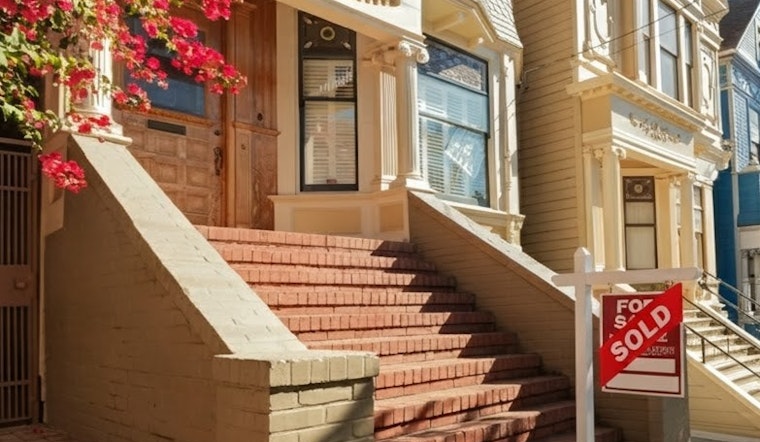
The housing market that spent two years languishing in what one real estate agent called an "ice age" has suddenly thawed—and the Bay Area now claims both of the nation's fastest housing markets. San Jose homes sold in a median of 19 days in September, while San Francisco came in at 21 days, both leaving the rest of the country in the dust compared to the national figure of 51 days.
It's a dramatic reversal for a city where, just months ago, homes that once sparked bidding wars were sitting unsold for a month or longer. Now those same properties are generating offers within days, according to San Francisco Chronicle.
The AI Money Machine
The driving force behind this sudden surge? A flood of wealth from San Francisco's booming artificial intelligence industry. Redfin reports that pending home sales jumped 17.1% year-over-year in September—the biggest gain among major metropolitan areas nationwide. Companies like OpenAI and Anthropic have been hiring aggressively and offering generous pay packages, creating a wave of cash-flush tech workers ready to buy homes.
"San Francisco is seeing a homebuying boom among young tech workers who just got big signing bonuses with AI companies or other tech companies and are thinking about starting families," Ali Mafi, a Redfin Premier real estate agent, explained in the report. "A lot of people have more confidence in buying homes because they're making more money, which means they're spending less of their paycheck on housing costs."
According to SF Standard, the impact could dwarf previous tech booms. OpenAI's valuation recently jumped from $300 billion to $500 billion—equivalent to five Facebooks at IPO stage—while Anthropic reached $183 billion. Unlike past cycles where workers had to wait for IPOs, both companies have allowed employees to cash out pre-IPO by selling shares back to the company or to outside investors.
Mission Bay: Ground Zero for the AI Boom
The transformation is perhaps most visible in Mission Bay, where OpenAI has assembled a massive real estate footprint. The company now occupies nearly 1 million square feet across the neighborhood, according to San Francisco Chronicle. OpenAI's expansion includes a 315,000-square-foot building at 550 Terry Francois Boulevard—the former Old Navy headquarters—and nearly half a million square feet subleased from Uber.
"I think San Francisco is behaving differently because it has emerged as a pocket of growth in a sea of stagnation, not just in California but across much of the country," said Arrian Binnings, a San Francisco real estate agent with Christie's International Real Estate, as reported by San Francisco Chronicle.
Mia Takami, a Realtor with eXp Realty, has witnessed the boom firsthand in Mission Bay. Last September, she had more than a dozen listings available, as reported by San Francisco Chronicle. By the end of this September, she had none. Most of her buyers are homeowners looking to live close to work, though investors are also jumping in, betting on San Francisco's rising rents and reputation.
West Side Story: Where Homes Sell Fastest
While the AI boom centers around Mission Bay and SoMa, the city's west side neighborhoods are actually seeing the fastest sales. Homes in the Sunset, Parkside, and Golden Gate Heights sold in an average of just 19 days this year, according to local real estate analysis reported by Ruth Krishnan Group. That's compared to 25 days for Richmond/Lake/Jordan Park and Forest Hill/Miraloma/West Portal areas.
The SF Standard notes that homes in these west side neighborhoods sold for an average of 20% above listing price over the last 12 months. The phenomenon has even earned a nickname among brokers: the "Sunset Special"—a strategy where sellers list low to generate buzz and attract buyers willing to bid significantly over asking.
Meanwhile, downtown and eastern San Francisco neighborhoods—areas that saw the bulk of new condo construction over the past decade—continue to struggle, as reported by San Francisco Chronicle. Rising homeowners association costs have kept condo prices declining, though even that market may be starting to turn around.
The Return-to-Office Effect
It's not just AI money driving the housing surge. Many companies are requiring workers to return to the office, prompting more people to move into or near the city, according to Redfin. San Francisco office visits jumped 19% year-over-year in September—the largest increase among markets analyzed by Placer.ai.
This dynamic is reshaping the broader Bay Area real estate landscape. While San Francisco heats up, San Francisco Chronicle reports that Tri-Valley suburbs like Dublin, Pleasanton, and San Ramon have cooled significantly. Home prices in the Tri-Valley decreased by approximately 6% from September 2024 to September 2025, as return-to-office mandates sap demand from suburbs while heating up competition closer to San Francisco and the South Bay.
Mortgage Rates Finally Drop Below 6.3%
While AI wealth grabs headlines, mortgage rates dropping to 6.26% have sparked renewed buyer interest across the Bay Area. After starting 2025 averaging over 7%, rates have fallen to their lowest level since 2022, according to CBS News, with the current average sitting at 6.13%.
"When you live in a place where a desirable, move-in ready home often costs $2 million, a half-percentage-point drop in mortgage rates can dramatically lower your monthly housing payment," Mafi explained to Redfin. While the decline hasn't sparked a national buying frenzy, it has brought Bay Area buyers off the sidelines—particularly those with AI money burning holes in their pockets.
Supply Squeeze Intensifies Competition
Adding fuel to the fire, San Francisco is one of just two major metros where active listings actually fell last month. Redfin data shows inventory dropped 7.7% year-over-year, as many prospective sellers with lower mortgage rates wait for conditions to improve further before listing.
"There aren't a ton of homes for sale in the Bay Area because many prospective sellers here can afford to wait until the price is right," Mafi told Redfin. "A lot of homeowners are considering selling but holding off until home prices go up and mortgage rates drop further."
The balance of power between buyers and sellers is shifting dramatically. Nationwide, there were 36.7% more home sellers than buyers in September, according to Redfin. But in San Francisco, there were only 10.2% more sellers than buyers—down from a peak of 47.1% in May.
Nearly Half of Homes Sell in Two Weeks
The speed of sales tells the story. According to Redfin, 48.7% of San Francisco homes that went under contract in September did so within just two weeks—up from 26.1% a year earlier. That 22.6 percentage point gain represents one of the largest increases among major metros. Nationwide, just 32.8% of homes sold that quickly.
"The market had been in an ice age the past couple of years, but this autumn we saw our first signs of the big thaw," Binnings told the San Francisco Chronicle.
What This Means for Prices
Despite the surge in sales velocity, prices haven't yet climbed dramatically. The median home price in San Francisco was essentially flat year-over-year in September, though San Francisco Chronicle notes this may be partially due to declining condo prices skewing overall figures. Single-family home prices have held up relatively well.
But Patrick Carlisle, chief market analyst at Compass, sees the writing on the wall. According to SF Standard, year-to-date median prices are up almost 4% to $1.7 million. More importantly, the combination of surging sales and declining inventory typically signals that price increases are coming.
"If the worldwide AI economic tsunami continues, then I would expect an accelerating explosion of wealth in San Francisco," Carlisle told SF Standard.
San Francisco's housing market has emerged from its post-pandemic doldrums not with a whimper but with a roar—powered by AI wealth, return-to-office mandates, and a supply crunch that's pushing buyers to move quickly or risk losing out entirely.





