

























































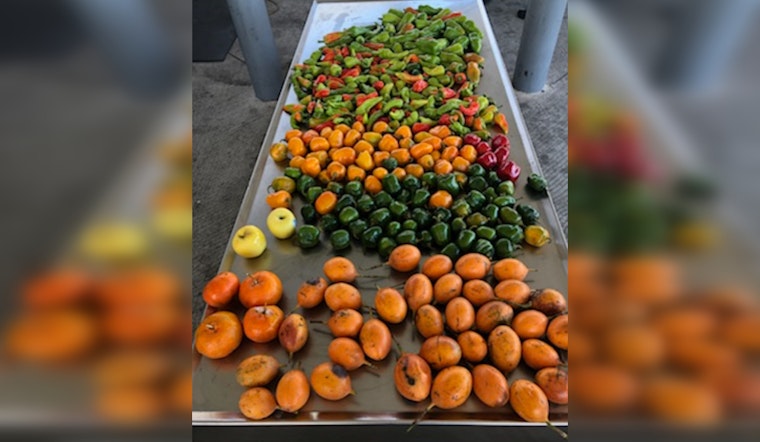
As the holiday season approaches, U.S. Customs and Border Protection (CBP) is reminding travelers about the dangers of bringing certain agricultural goods across borders. The agency is focusing on items often used in holiday traditions that could carry harmful pests and diseases, according to the U.S. Customs and Border Protection.
Acting Port Director Eugene E. Crawford of the Laredo Port of Entry stressed the importance of awareness among travelers. "We would like to remind cross border travelers as we approach the holidays that there are certain fruits, vegetables commonly used in holiday observances that are prohibited from entry," Crawford mentioned in a U.S. Customs and Border Protection news release. The U.S. Customs and Border Protection is encouraging the public to declare any agricultural items and to review the list of prohibited and restricted items before trying to cross into the U.S.
Traditions like the posadas, which are religious festivals held from December 16 to 24, often involve specific foods that are now under scrutiny. The signature ponche, or punch, made with sugarcane, guavas, and apples has become a staple at these events. However, these ingredients are prohibited due to the risk they carry.
The list of banned citrus fruit for personal importation includes oranges, grapefruit, tangerines, sour oranges, and sweet limes. Other fruits such as apples, guavas, mangoes, peaches, and pomegranates also made the list. The consequences for attempting to freely cross the border with undeclared goods could result in steep penalties. "Failure to declare prohibited agricultural items also can result in fines," the U.S. Customs and Border Protection news release warns, with fines running up to $1,000 for personal violations, and even higher—beyond $250,000—for commercial importations.
For those looking to stay informed and avoid any disruptions to their holiday plans, the U.S. Customs and Border Protection advises a visit to the "Know Before You Go" guide. Here, travelers can find comprehensive information about what fruits, vegetables, and other items are prohibited. In anticipation of the posadas and other holiday celebrations, this guidance may help to ensure a hassle-free entry back into the U.S. as well as protect the local agriculture from foreign pests and diseases.



