

























































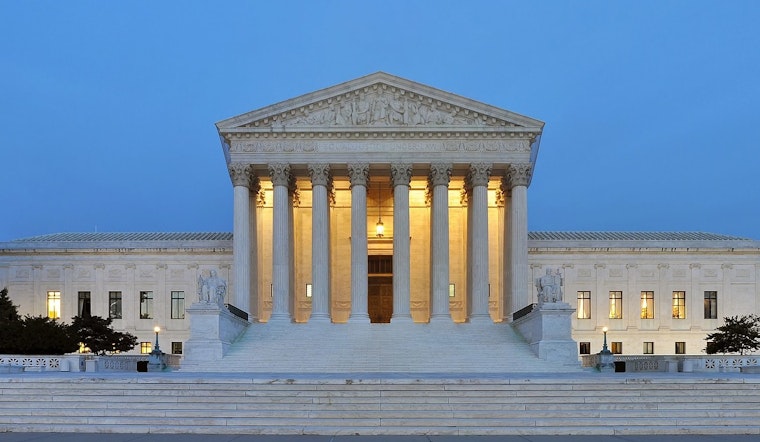
A Vernon Hills toymaker pressed its challenge to President Trump’s sweeping import duties before the U.S. Supreme Court on Wednesday, asking the justices to decide whether a president may use emergency powers to impose wide-ranging tariffs without Congress. The case centers on whether a 1977 emergency statute can be read to authorize what look like taxes on everyday imports — from classroom kits to holiday must‑haves — and business owners here say the uncertainty has already hit planning and payroll.
The high court consolidated Learning Resources' petition with a related challenge and set an expedited argument for Wednesday, according to SCOTUSblog. Local coverage notes that the Vernon Hills company behind products such as Botley the Coding Robot has become the face of a small‑business fight with national stakes, as reported by Crain's Chicago Business.
Learning Resources' CEO Rick Woldenberg says the tariffs forced the company to shelve expansion plans and pare back hiring ahead of the holiday season. "All the people that are raising their prices are doing it with a sense of dread," Woldenberg told The Associated Press, arguing the legal question is urgent for small importers that cannot easily shift supply chains.
Lower courts sided with challengers — then paused relief
Multiple lower courts found that the administration had overstepped its authority by using the International Emergency Economic Powers Act to impose the duties, with the U.S. Court of International Trade issuing a sweeping judgment and the Federal Circuit affirming that ruling en banc before staying enforcement pending appeal. Those rulings and stays are laid out in court records and case summaries maintained by legal trackers. Court records compiled at Clearinghouse summarize the CIT and Federal Circuit decisions, and trade‑law firms have published analyses of the appeals and their practical effects.
The key legal question: Does IEEPA include tariff power?
At issue is whether the word "regulate" in IEEPA can reasonably be read to include the power to levy tariffs — a power that the Constitution and long statutes historically place with Congress. A Congressional Research Service explainer notes that IEEPA authorizes regulation of importation but does not mention tariffs explicitly, and that courts have invoked the so‑called "major questions" doctrine when statutes are stretched to authorize huge economic actions without a clear congressional statement. CRS analysis and coverage on the case outline how those doctrines frame the justices' review; SCOTUSblog provides ongoing previews and case filings for readers tracking the argument.
What comes next — and the local fallout
If the court rules against the administration, Customs collections from the IEEPA‑based duties could become subject to refund; Reuters estimates roughly $89 billion in tariff receipts tied to the measures so far, a figure officials and analysts are watching closely. Reuters has reported those revenue estimates and the possibility of large refunds, and trade firms warn importers will likely need administrative or court steps to recover duties if the law is struck down. Trade‑law advisers also note that even a favorable ruling for challengers may result in a limited remedy that leaves many importers scrambling for their own relief through customs processes or additional litigation.
For Vernon Hills — and for small importers across the country — the Supreme Court’s decision will be about more than legal doctrine: it will determine whether businesses can plan for the next season without facing sudden, economy‑wide levies. Whatever the outcome, judges’ reasoning in the case will reverberate through trade policy and could redraw the line between presidential emergency powers and Congress’s taxing authority.





