

























































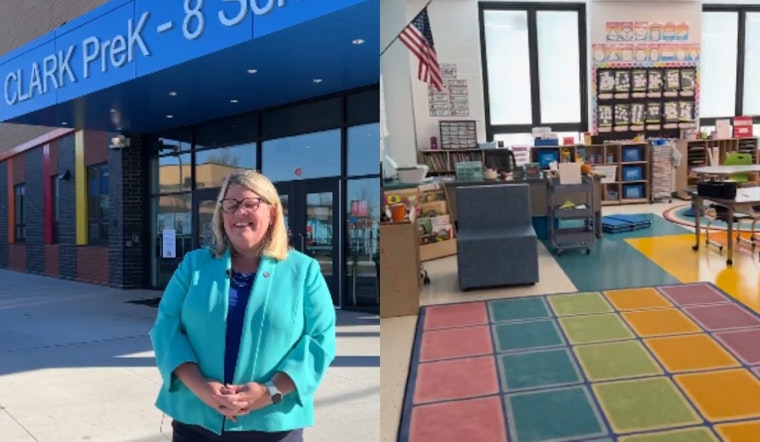
In a city continuously reshaped by the ebb and flow of its populations, Cleveland is tackling the multifaceted challenge of demographic change head-on. A recent social media post by the City of Cleveland pointed out the impact such shifts have on local educational infrastructure. Specifically, they highlighted how under-enrolled school buildings catalyze inequitable educational opportunities. The post brought into focus the upcoming opening of the new Clark School, a fusion borne out of necessity from the old Clark and Walton schools.
Cleveland, like most cities, is seeing big demographic shifts. Under-enrolled buildings create inequitable opportunities for students.
— City of Cleveland (@CityofCleveland) November 18, 2025
Director Mary McNamara discusses these shifts and highlights the new Clark School, which merged students from the old Clark and Walton schools. pic.twitter.com/qYxo5U90uM
With student numbers dwindling in certain district schools, the decision to merge establishments reflects a broader trend: as families relocate, commit to other educational choices, or as birth rates shift, the school system must adapt. The Clark School's formation is an attempt to right-size educational facilities to the current demographic realities. Highlighted by the City of Cleveland, Mary McNamara, the Director, has been discussing these demographic trends and their implications on the local education system.
America's urban heartlands have long been the theater for massive demographic realignments, each with their own set of cascading effects on community cornerstones—none more so than schools. The key is the balance between resource allocation and the preservation of reach and quality education for every child. Directors, like McNamara, who oversee such transitions, are often tasked with mapping out strategies to maintain this delicate equilibrium in the face of shifting grounds. McNamara's efforts at integrating students from Clark and Walton into the new Clark School exemplify this juggling act.
McNamara commented on the state of flux and its necessity for action, saying through the City of Cleveland, "Under-enrolled buildings create inequitable opportunities for students." These words lay bare the stark reality of uneven student distribution among schools and the pressures it creates. While merging schools can be fraught with community concerns and logistical hurdles, the anticipated new Clark School stands as a testament to the city's answer to changing demographics. With careful planning and community engagement, initiatives like this envision a more efficient use of resources and balanced educational offerings.
As the landscape of urban education continues to morph in Cleveland and similar cities, the responses from school districts and city leaders will shape the opportunities accessible to future generations. The new Clark School, born out of demographic shifts and necessity, promises to be a hallmark of adaptive education strategy in Cleveland's current era.





