

























































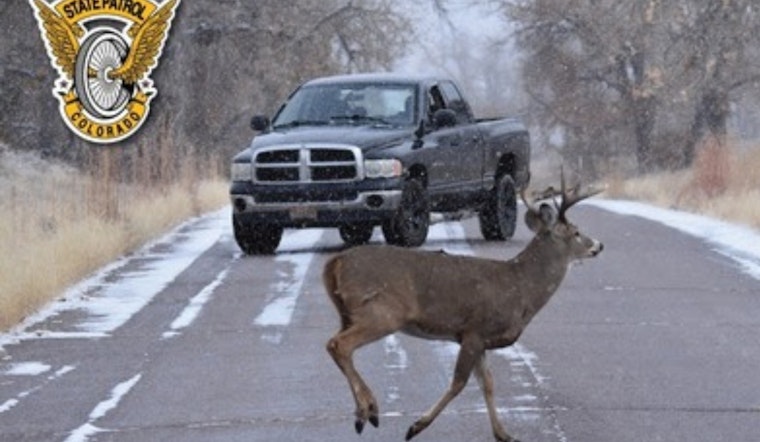
As the chill of November sets in and snow begins to blanket the terrain of Colorado, the region witnesses not just a change of season but an uptick in wildlife activity, which, in turn, leads to an increase in wildlife-vehicle collisions. According to the Colorado State Patrol, November, being the peak rutting season for many species, saw 530 wildlife crashes last year, thankfully with 98% resulting only in property damage. Col. Matthew C. Packard, chief of the Colorado State Patrol, attributes the rise in incidents partly to wildlife migration and the search for less snowy grounds, as stated in a press release.
Motorists are reminded by Packard that when navigating these shared spaces with our four-legged neighbors, "This is particularly true with pronghorns on the eastern plains," as per Colorado State Patrol. As snow pushes wildlife towards the roads, drivers must be vigilant. The financial repercussions are not to be underestimated either; the Rocky Mountain Insurance Information Association reports wildlife collisions cost the insurance industry about $1.1 billion annually.
Average property damage for such mishaps hovers around $3,000, which makes the case for heightened caution. The best practices for drivers to minimize risk include abiding by speed limits and using high beams when alone on the roads. This is especially pertinent in rural areas or neighborhoods near open spaces. Maintaining alertness improves the chances of spotting wildlife near or on the roads, affording drivers time to adjust speed or stop, provided the road behind is clear.



