

























































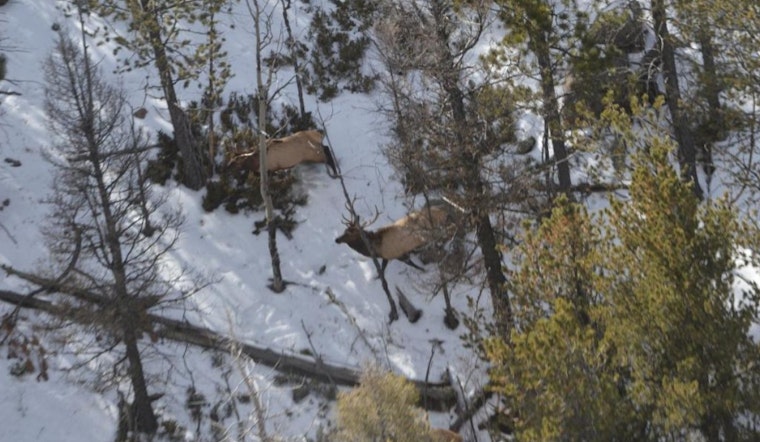
Colorado's wild animals better not get camera-shy in the coming days, because biologists armed with helicopters are about to get a real, up-close-and-personal look at them. Starting Dec. 2, Colorado Parks and Wildlife (CPW) is taking to the skies to count and categorize the state's big game, starting in the Southeast Region. From Trinidad to Leadville and beyond, these CPW staff will embark on a ballet of low-altitude flights to better understand the state of local wildlife populations.
This aerial sleuthing isn't just about getting a headcount; it's a pivotal piece of the wildlife management puzzle. The data collected from these classification flights allows CPW to assess herd health, specifically by examining the six-month survival rate of fawns and calves, according to Colorado Parks and Wildlife. Julie Stiver, senior wildlife biologist for CPW’s Southeast Region, pointed out the flights' importance, saying, "The data is critical to our work of forming population models, management strategies and to set future hunting license numbers," as per Colorado Parks and Wildlife. It's safe to say that researchers peering out of helicopters are playing a considerable role in how Colorado balances its ecosystems.
It's more than just observational work, too. Some of these flights west of I-25 include physically capturing animals to strap on GPS collars. These collars provide long-term movement and survival data critical to informed conservation efforts. Animals will be captured using nets or tranquilizer darts, probably a bit of a rude awakening for an elk or mule deer on a chilly Colorado morning, but all for the sake of science.
Helicopter surveys scheduled over the southeastern plains promise to be quite the extravaganza, encompassing Kit Carson and Cheyenne counties, with a grand finale of flights over the Arkansas River and its drainages from Pueblo to the Kansas state line. While Stiver emphasized the brief nature of these visits, assuring that the helicopters "will only hover long enough for wildlife biologists to count and determine the sex and age of animals within the herd," as obtained by Colorado Parks and Wildlife.





