

























































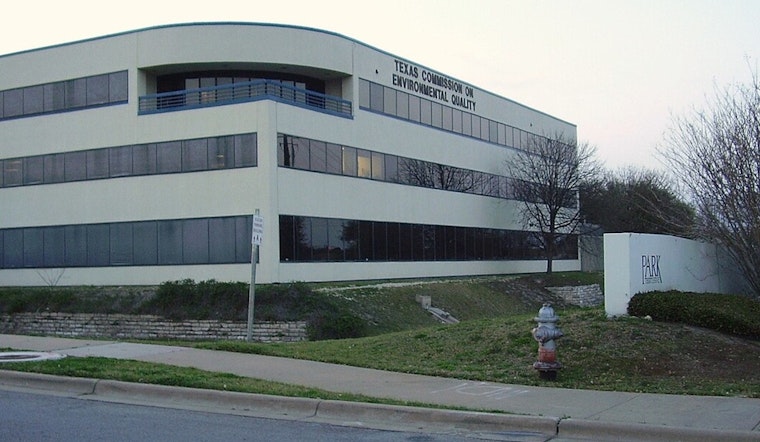
PODER, an East Austin environmental justice group, is calling on neighbors to push the Texas Commission on Environmental Quality for a public meeting after a defense contractor applied for an air permit to build an autonomous boat manufacturing facility at 1312 Dalton Lane. The permit application describes work involving resin and gelcoat spray, resin-based adhesives, and resin injection, processes that often spark concern about odors and toxic emissions. Activists and some elected officials say the review timeline gives the neighborhood only a brief chance to weigh in.
What's in the permit
According to TCEQ, the proposed facility at the Eastside Commerce complex would produce surface vessels using gelcoat and resin spray application and curing, resin-based adhesive use, cutting and drilling, and resin injection. The agency document lists proposed annual emissions of about 50.12 tons of volatile organic compounds and 43.85 tons of hazardous air pollutants, with particulate emissions at roughly 0.001 tons per year. The application notes that controls would include ventilation design, high-efficiency spray equipment, and dry filters for particulates.
Neighbors raise cumulative impact concerns
Local organizers say those numbers cannot be viewed in isolation. PODER points to the site's proximity to the airport, a nearby tank farm, heavy truck traffic, and planned highway work, arguing that the community already faces multiple air quality stressors and should have a chance to question regulators and the company in a public forum. The group has urged Austinites to file comments and request a meeting. The company, for its part, told local reporters it is committed to meeting local health, safety, and environmental requirements and to working with community partners as it develops the site, as reported by KXAN.
How the review works
TCEQ's public notice explains that the commission will hold a public meeting if the executive director finds there is a significant degree of public interest or if a local legislator requests one, and that people who submit comments can be added to the application's mailing list. The notice also outlines the path from technical review to a preliminary decision and the later procedures for requesting a contested case hearing if petitioners show they would be adversely affected in a way not common to the public. Those procedural steps and criteria are described in the agency's public notice and application documents. According to TCEQ, a public meeting is not the same thing as a contested case hearing, but it can be arranged when public interest is significant.
Public response is growing
Community filings and requests have poured in since the application was posted. State records and local reporting show dozens of public comments, numerous hearing requests, and multiple requests for a public meeting, and state Rep. Lulu Flores has submitted a formal request for a hearing to the TCEQ chief clerk. As reported by KXAN, the TCEQ database listed 158 comments, 53 hearing requests, and 15 public meeting requests on the docket at the time of reporting.
Why Saronic set up shop in Austin
Saronic has been expanding its Austin footprint in recent months as it scales production of autonomous surface vessels for defense customers and hires for manufacturing and technical roles. The company has said it is growing operations in Austin to meet demand and to increase production capacity, according to a company announcement about its Austin expansion. Saronic notes major facility acquisitions and hiring plans in the area.
How to weigh in
Residents who want to comment can submit written input to the TCEQ through the agency's public comment portal or by mail to the Office of the Chief Clerk; any information supplied becomes part of the public record. The permit's public comment window is short, and the deadline in published notices falls in late November, so community groups say this is the moment to get questions and concerns into the administrative record. Anyone seeking a contested case hearing will need to follow TCEQ's instructions and file a timely request that explains how they would be uniquely and adversely affected by the permit decision.





