

























































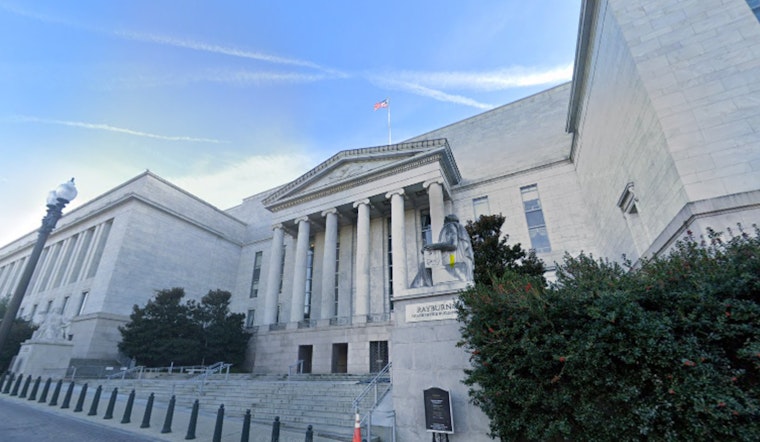
Chairman James Comer of the House Committee on Oversight and Government Reform has intensified his investigation into the sordid underbelly of Jeffrey Epstein's financial dealings. On a mission to bring clarity and accountability over an issue mired in darkness and conspiracy, the committee issued subpoenas to J.P. Morgan and Deutsche Bank for Epstein's financial records. Comer's probing doesn't stop there; he's also reaching out to the U.S. Virgin Islands, seeking documentation from Attorney General Gordon Rhea to further the committee's review of the federal government’s investigation into the disgraced financier and his companion, Ghislaine Maxwell, according to the Committee on Oversight and Government Reform.
The Oversight Committee's pursuit of transparency has unearthed approximately 65,000 documents to date, as stated on the committee's website. These documents include a host of materials from the Department of Justice, the Epstein Estate, and transcripts from long-awaited depositions of former U.S. Attorney General Bill Barr and former Secretary of Labor Alexander Acosta. The latter, having voluntarily appeared before the committee, provided an account that, according to his deposition transcript, "destroyed the Democrats’ Trump-Epstein smear," as noted by the Committee on Oversight and Government Reform.
As rigorous as the Committee on Oversight and Government Reform efforts may sound, the path is fraught with complications. Not all subpoenaed parties were able or willing to contribute to the investigation in the ways expected. For example, Chairman Comer acknowledged that former FBI Director Robert Mueller was unable to testify due to health issues, and thus the committee had to withdraw the subpoena. On the other hand, formal written declarations have been accepted by the committee from several former Attorneys General and the former FBI Director James Comey, who stated under risk of perjury, they had no information pertaining to Epstein or Maxwell. The actions of this committee represent a deliberate stride towards what Comer hopes will culminate in a full account of Epstein and Maxwell’s vast and opaque financial network.
Yet the narrative is incomplete, the chapter on the Clintons still unwritten. In communication with legal representatives, the committee is negotiating the terms to add the testimonies of Bill and Hillary Clinton to the growing anthology of deposition transcripts, some of which are already publicly available. The intrigue surrounding these high-profile depositions is palpable, and for the American public, the forthcoming insights could either fan the flames of speculation or quench a thirst for long-withheld truths. The Committee on Oversight and Government Reform's latest moves are yet another step in this complex dance of disclosure and discovery.
As a final measure, and potentially significant in its implications for understanding the financial mechanisms of Epstein’s operations, the committee sought suspicious activity reports (SARs) from the U.S. Department of Treasury. These reports could provide vital insights into Epstein and Maxwell’s financial transactions that could be key to understanding the full extent of their illicit activities. The Committee on Oversight and Government Reform notes the Department of Treasury’s full cooperation in this endeavor, paving the way for what may be a decisive moment in unravelling a narrative too long obscured by silence and shadows.





