

























































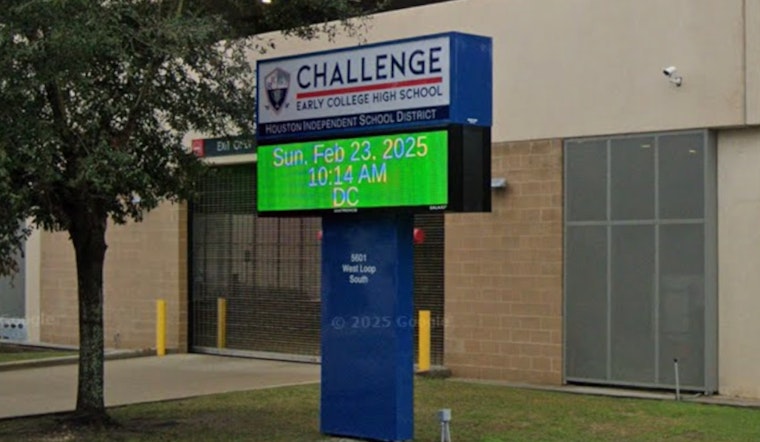
Houston ISD has informed principals at seven of its top magnet high schools that they can explore partnerships with nonprofit operators under Senate Bill 1882. Four of the schools have been selected to “move forward” toward partnership contracts for the 2026–27 school year, while three others will have a planning year to decide. HISD says the schools would remain public but gain more control over their budgets and operations through individual performance contracts. Parents, teachers, and civil‑rights groups have raised concerns that the changes could affect who is admitted to these campuses.
As reported by Houston Chronicle, Houston ISD will pursue SB 1882 partnerships at four campuses next year: Challenge Early College High School, Energy Institute High School, Houston Academy for International Studies, and the Kinder High School for the Performing and Visual Arts. Carnegie Vanguard High School, DeBakey High School for Health Professions, and Eastwood Academy will take a planning year before deciding whether to apply. HISD calls the option a new "Level 5" of autonomy for top-performing schools and says partnerships could provide extra per-pupil funding. District staff have started talks with principals and potential nonprofit partners about campus-specific performance contracts.
What SB 1882 Would Change
Senate Bill 1882 lets districts form in‑district charter partnerships with nonprofits, institutions of higher education or state‑authorized charter operators that would run a campus under a performance contract while the campus remains a public school. According to the Texas Education Agency, eligible campuses can receive the greater of the district’s state funding or the per‑student funding a state‑authorized charter would get, and partners gain broad authority over curriculum, staffing and budgets. The Texas Education Agency guidance also lays out application steps and a required timeline for partnerships beginning in 2026‑27, including a mandatory letter of intent and final application package. HISD has said it will work with principals and partners to define the terms of any performance contract before bringing agreements to the Board of Managers.
Parents and teachers push back
Teachers and parents say the change could undermine the districtwide lottery that gives students an equal chance at elite magnets. Jackie Anderson, president of the Houston Federation of Teachers, told the Texas Observer she worries operators will "pick and choose students" and that the union opposes any move that creates new inequities. Parents at HSPVA and other campuses have voiced similar concerns about accountability and access, with some saying past district channels for complaints may disappear if campuses become separate operating entities. Community members plan PTO and neighborhood meetings to press principals and the district for firm guarantees before any contracts are finalized.
District response and process
HISD spokesperson Lana Hill told the Houston Chronicle that campus leaders are not required to enter into SB 1882 partnerships and that schools would remain magnets if they choose not to participate. Hill said current campus staff — apart from principals — would remain district employees with the same rights and benefits, and that the district will work with principals and nonprofit partners to define performance contract terms before a public board vote next spring. Superintendent Mike Miles described the policy as a way to preserve campus excellence while giving principals more control over instruction, calendars and budgets. The district estimates partnership campuses could net an additional $700 to $1,500 per pupil under certain funding scenarios.
History and equity concerns
HISD’s magnet program traces to 1975 as an effort to desegregate the district, a history parents point to when warning against changes that could reduce open access. Former superintendent Terry Grier voiced a related concern at a 2010 board meeting — "we’re allowing principals to decide who gets in and who doesn’t" — a line reported at the time by Houston Press. Advocacy groups say that preserving the districtwide lottery, active recruitment in underrepresented neighborhoods and clear admissions rubrics must be non‑negotiable elements of any partnership contract. Without those safeguards, they warn, autonomy could translate into exclusion.
Legal and fiscal risks
Past SB 1882 partnerships around Texas have produced mixed results, with several contracts ending early and some campuses failing to meet academic and financial benchmarks, as reported in local coverage summarizing an investigative review. The Beaumont Enterprise summarized findings that dozens of partnership agreements were terminated early and that some operators struggled with audits and academic goals. Policy groups such as the Intercultural Development Research Association argue the law's rules can allow inconsistent oversight and funding gaps that worsen inequities. While TEA procedures require districts to adopt authorizing policies and complete application steps, local advocates say contract language must explicitly protect lottery admissions, special‑education services and transparent financial reporting before any campus is turned over to outside management.
Next steps and what to watch
HISD says it will continue working with principals and prospective nonprofit partners to shape performance contracts and plans to present any agreements to the Board of Managers for a public vote next spring, as per inkl. Parents and teachers are lining up PTO meetings and public comment at board hearings to demand concrete guarantees around admissions, staffing and student services. If the district and partners finalize applications to state programs, the next several months will determine whether the magnet lottery survives at these flagship campuses and how autonomy is balanced with equity.
Watch for the district's public timeline on contract language, PTO meeting notes and the Board of Managers' agenda in the coming months. We will continue to follow HISD and TEA filings and community responses as details about partners, contracts and admissions rules emerge.





