

























































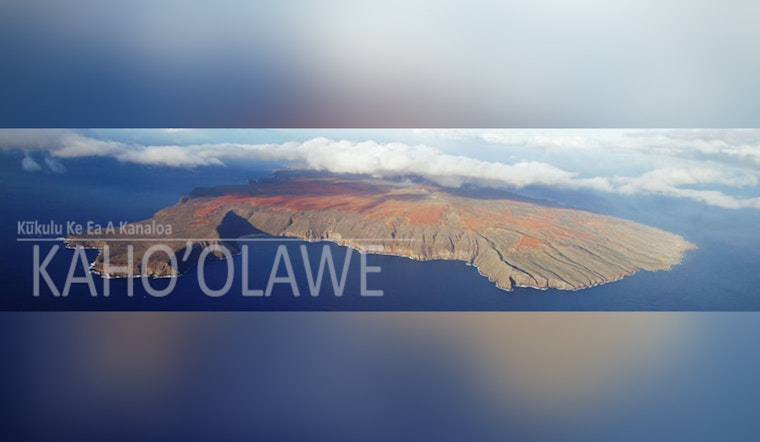
Two small boats, nine determined Hawaiians and years of stubborn organizing flipped the script on the U.S. military and a sacred island it treated as a target. The unauthorized landing of the Kahoolawe Nine in January 1976 lit the fuse on a grassroots campaign that mixed risky ocean crossings, courtroom battles and political pressure, eventually ending live-fire training and triggering the island’s return. Even with that win, unexploded ordnance and deep ecological scars still keep large parts of Kahoolawe off-limits and under careful watch.
The landing that sparked a movement
On Jan. 4, 1976, supporters gathered at Maalaea Harbor as a small flotilla headed toward Kahoolawe. A Coast Guard helicopter intercepted most of the boats, but one craft slipped through and nine activists managed to land on the island. Those nine — Walter Ritte, Emmett Aluli, Ellen Miles, Karla Villalba, Steve Morse, Kimo Aluli, George Helm, Gail Kawaipuna Prejean and Ian Lind — became central figures in the formation of Protect Kaho'olawe 'Ohana and helped turn a local fight into a statewide movement, according to Civil Beat.
Weapons tests that reshaped the island
The U.S. military began using parts of Kahoolawe as a weapons range after the attack on Pearl Harbor. By the 1960s, the island had taken years of torpedo runs, gunnery practice and blast testing. In 1965, during Operation Sailor Hat on the island’s southwest shore, the Navy detonated massive TNT charges equal to hundreds of tons of explosives, and those blasts left behind a giant crater and, experts say, damaged the freshwater table, according to the National WWII Museum.
From beach protests to the courtroom
Protect Kaho'olawe 'Ohana did not stop at symbolic landings. The group went to federal court and kept pressure on the Navy until judges ordered an environmental impact statement and a survey of historic and cultural sites, a turning point that kept official scrutiny squarely on the range. Those rulings, along with later agreements, forced the Navy to begin limited mitigation, cultural-site protections and soil conservation work on the island, according to the Kaho'olawe Island Reserve Commission.
Washington responds: memo, money, transfer
The effort eventually reached the Oval Office. In 1990, President George H.W. Bush issued a memorandum telling the Secretary of Defense to “discontinue use of Kaho'olawe as a weapons range” effective immediately, according to the American Presidency Project. Congress later locked the island’s return into law: Title X of the Department of Defense Appropriations Act authorized its conveyance to the State of Hawai'i and created a trust for cleanup that made up to $400 million available for ordnance removal, according to Congress.gov.
Cleanup moved slowly and left danger
The Navy’s unexploded ordnance clearance project wrapped up around 2004. By then, about 75 percent of Kahoolawe’s surface had been cleared, while roughly one quarter of the island remained unsafe because munitions still lie buried or unstable. The Kaho'olawe Island Reserve Commission reports that some zones were only cleared to shallow depths, so unescorted access in those areas is banned and all visits operate under tight controls. That mix of partial cleanup and cultural restoration is why, even decades after the first occupations, the island remains a cautious work in progress.
What the movement left behind
Ending the bombing did more than alter military training schedules. The fight helped fuel a resurgence in Hawaiian cultural practice, laid groundwork for institutions focused on Native claims and nurtured a community of kia'i, or stewards, who continue ceremonies and protection work on the island under escort. Contemporary reporting and oral histories describe how Protect Kaho'olawe 'Ohana and state stewards still travel to the island under controlled access, with that legacy documented in recent coverage and archives, as recounted by the Maui News.
Legal legacy
Title X established the Kaho'olawe trust fund, spelled out cleanup and access standards and allowed the Navy to retain access control until remediation was finished or until a specified deadline, according to the congressional record. That legal structure still shapes who can set foot on the island and how the reserve is managed, so funding, access and cultural-use questions remain a live negotiation among federal agencies, the state and Native Hawaiian stewards.
Kahoolawe’s story works as both celebration and caution. A small group of activists forced a national policy shift and reclaimed a sacred place, yet decades of bombing left physical and ecological damage that will take generations to heal. For Hawaiians and the stewards who still visit with permission, tending the island is at once cultural practice and civic obligation.



