

























































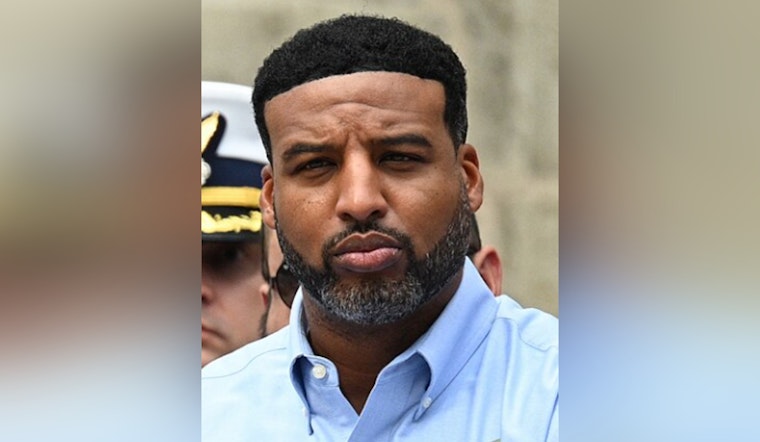
The Houston Police Department has told Council Member Edward Pollard it will no longer accept his office’s overtime funding for the District J Patrol, effectively putting the custom neighborhood program on ice. Pollard’s office has used district service funds since 2020 to pay officers for overtime shifts that focused on resident-submitted quality-of-life complaints. With HPD walking away from that setup, Pollard says the patrol is now defunct, setting up a very public fight over who gets to call the shots on patrol priorities in parts of southwest Houston.
HPD's directive
Houston Police Department Executive Chief Thomas Hardin told Council Member Edward Pollard’s staff in an email that council offices “decide the particulars of how the Houston Police Department spends OT funds for public safety operations,” according to Houston Chronicle. Hardin said the council office’s “strict parameters” limited how overtime could be used and cited an instance where officers spent about $4,100 in overtime helping solve violent food-truck robberies. “Your office's continued focus on spending money solely on this pet project is disturbing and disappointing,” he wrote.
Pollard's patrol and funding
Pollard says he launched the District J Patrol in 2020 to get officers more visible in neighborhoods and rebuild trust after George Floyd’s murder, using district service funds to pay for targeted overtime responses. Reporting shows his office has steered roughly $750,000 a year toward those overtime shifts, and the program outfitted officers with Polaris all-terrain vehicles that cost about $30,000 each, as reported in coverage of how council members deploy ATVs for community policing, as per Hoodline. Pollard told the Houston Chronicle the patrol is “defunct” for now and that he plans to keep pressing city leadership on the issue.
How residents used the portal
The patrol was built around an online portal where District J residents could file quality-of-life complaints that were then routed to officers working overtime, with staff updating each submission so neighbors could see what happened with their request. The program’s workflow and public tracking features are detailed in the Houston Chronicle and are summarized on the City of Houston's District J page, which directs residents to the patrol site for submissions. Pollard’s office has said that level of transparency was a major selling point for residents looking for faster fixes to nuisance problems.
District H retooled its approach
In nearby District H, Council Member Mario Castillo adjusted his own version of a local patrol after meeting with HPD officials. Instead of routing every complaint through council staff, residents will be able to view a map of nearby command stations and contact police directly, as reported by District H Patrol. Castillo said the change is meant to streamline reporting and ease HPD’s concerns about third-party routing of calls. He expects the tweaks to roll out in the coming weeks.
Overtime and budget pressure
The standoff arrives as city leaders are already wrestling with HPD overtime spending and how to fund extra shifts amid staffing shortages. HPD and the mayor’s office have faced scrutiny over overtime projections, and the department has been pushing for larger overtime budgets to cover gaps caused by vacancies, as noted by Houston Public Media. That financial squeeze helps explain why HPD leadership is guarding operational control, even as some council members try to carve out more locally directed responses.
Charter limits on council direction
HPD cited the city charter when it rejected overtime conditioned by a council office. The City of Houston’s government pages note that the city operates under a strong mayor system that vests administrative control, including day-to-day department operations, with the mayor and appointed department heads. That structure limits a council member’s authority to direct policing priorities, which is the legal question at the center of HPD’s refusal to accept overtime tied to specific council conditions. The clash is both an administrative and policy dispute over how far local control and accountability can really go.
What’s next
Council Member Edward Pollard says he plans to bring the issue to a citywide discussion and explore ways to bring back the District J Patrol in some form. HPD leaders have said they will maintain control over operations. Meanwhile, residents who used the District J portal are now using standard HPD channels, and the District J initiative remains a key part of Pollard for Houston.





.jpg)