

























































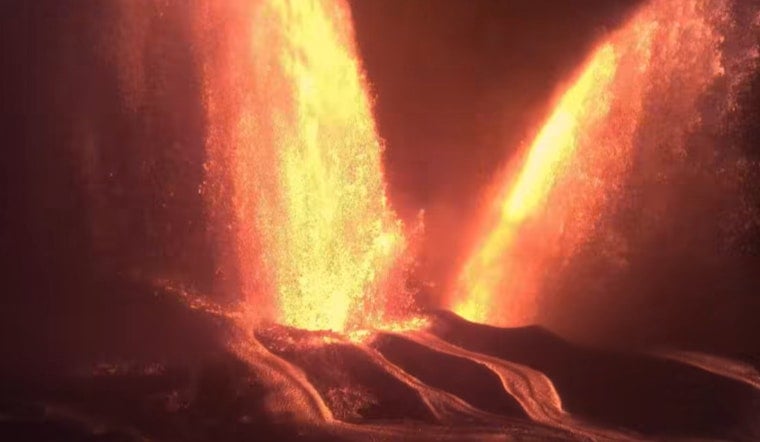
Mother Nature put on a fiery late‑night show yesterday as Kīlauea on Hawaii’s Big Island spilled over, sending streams of molten lava down the crater and pushing plumes of ash and smoke into the dark sky. Webcams and livestreams caught the glow lighting up the summit inside Hawaiʻi Volcanoes National Park, drawing in residents and visitors glued to online feeds. Park officials and scientists said the display followed several days of smaller, precursory overflows at the summit vents.
USGS: Overflows Ongoing, Another Burst Likely
Scientists with the U.S. Geological Survey’s Hawaiian Volcano Observatory reported that both summit vents are producing periodic overflows, and that inflationary tilt at the summit suggests another high‑fountaining episode is likely in the Nov. 23–25 window. “Plumes of gas are visible from both the south and north vents,” the latest HVO update notes, with the Volcano Alert Level staying at WATCH and the aviation color code at ORANGE. As outlined by the U.S. Geological Survey, recent overflows have remained largely confined to the Halemaʻumaʻu crater but can still generate tephra and gas that travel downwind.
Webcams Roll As Lava Spills Across Crater Floor
Live webcam feeds and clips shared by local newsrooms show lava spreading across the crater floor while ash and smoke billow from the vents. According to Big Island Video News, the overnight overflows picked up in frequency and were dominated by the south vent, throwing up short dome fountains that lined up with small bursts of seismic tremor. Multiple livestreams are still running for anyone who wants a front‑row digital seat to the summit activity.
Health Risks: Vog, Ash and Pele's Hair
Officials are warning that sulfur dioxide and fine volcanic particles can build into vog and irritate lungs, eyes and skin, especially for people with asthma or other respiratory issues. The Hawaiʻi Department of Health advises residents to limit outdoor activity, keep necessary medications close and keep an eye on local air‑quality reports as winds shift. According to the state health release, masks can help block ash and Pele’s hair but do not filter sulfur dioxide gas, so people in affected areas are urged to follow guidance from public‑health and emergency agencies.
How This Fits Into The Larger Eruption
The current summit action is part of an on‑again, off‑again eruption pattern that began on Dec. 23, 2024. Since then, Kīlauea has produced dozens of short and longer fountaining episodes that repeatedly refill and drain parts of the Halemaʻumaʻu crater. Previous episodes have sent fountains hundreds to more than a thousand feet into the air and covered much of the crater floor with fresh lava, although most of the 2024–2025 activity has stayed within the national‑park closure. For background on the eruption timeline and hazards, see the USGS eruption information page.
What To Watch Next
HVO says it will keep issuing daily updates and is urging visitors to respect closures while Hawaiʻi County Civil Defense and park managers keep an eye on conditions. For the latest advisories and webcam links, check Hawaiʻi Volcanoes National Park and the county's active‑alerts page at Hawai‘i County Civil Defense. Officials stress that, so far, eruptive activity is staying within the park, although air‑quality impacts and light tephra fall can still reach downwind communities.





