

























































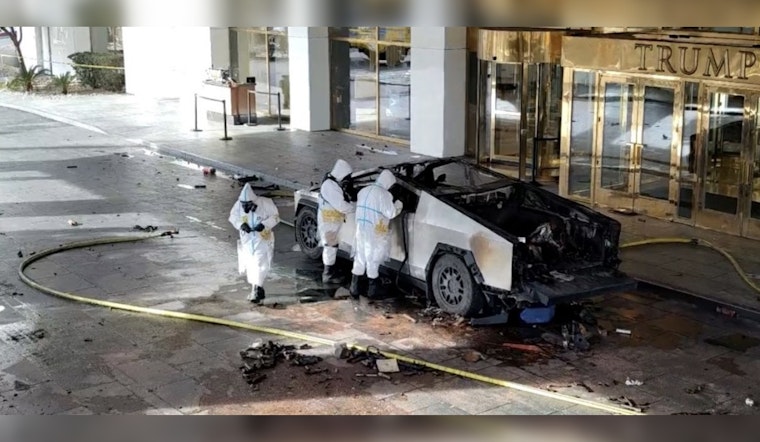
Las Vegas Metro is proposing changes to how officers respond to vehicle‑borne blasts after releasing a lengthy review of the January 1 Cybertruck explosion outside the Trump International Hotel. The department’s new document flags gaps in officer safety, communications and resource management during a high‑profile New Year’s Day response that left the vehicle’s driver dead and seven people injured. Metro officials say the report is meant to turn those lessons into concrete training, equipment and coordination updates for future events.
The department published a 78‑page after‑action report prepared by Metro’s Office of Internal Oversight and Constitutional Policing, a release first reported by the Las Vegas Review‑Journal. The Review‑Journal notes the report recommends changes across officer safety, resource allocation, communication and training to strengthen future responses. Metro said the evaluation was designed to provide a comprehensive review of its actions and to identify steps to reduce confusion and improve interagency coordination.
Investigators concluded the incident began when a man in a rented Tesla Cybertruck parked in the hotel porte‑cochere and detonated an improvised explosive device; the driver fatally shot himself seconds before the blast, and authorities recovered fireworks, camping fuel and gas canisters from the vehicle, according to The Verge. The January 1 explosion prompted a multi‑agency investigation involving LVMPD and federal partners and temporarily closed the hotel and nearby sidewalks. Seven bystanders suffered minor injuries and were treated in the days after the blast.
What Metro recommends
The AAR's consolidated recommendations target specific operational fixes, from scene containment to technology and training changes. The report urges agencies to implement targeted training for first responders focused on EV‑specific hazards, and to beef up joint Incident Command System drills and liaison roles, as per the Cybertruck After Action Report. Other prioritized items include expanded PPE for crime‑scene techs, clearer communication protocols for command posts, and wider use of drones and fusion‑watch tools during initial assessments.
Why it matters on the Strip
Metro warns the shortcomings it identified could complicate responses during big tourism events and recommends extending ABX coverage around New Year’s Eve to ensure adequate staffing during peak demand, as noted by the Las Vegas Review‑Journal. The newspaper also notes Metro praised coordination with federal partners and private‑sector security, saying that partnership work “were essential” in mitigating public risk during the incident. For Strip employees and travelers, the practical result could be more drills, clearer evacuation roles and extra specialty assets staged during holidays.
What Metro has already done
The AAR itself notes some recommendations have already been put into practice: LVMPD says the EV‑hazard training recommendation was initially completed on January 31 and later added to the department’s online training platform, and fit‑testing and masks for CSI personnel were distributed in spring, as per the report. Those status updates show the department has begun moving on near‑term fixes while longer policy and ICS changes are planned. The report assigns bureaus and timelines to each recommendation so implementation can be tracked internally.
Turning the AAR into day‑to‑day policy will be the next test: Metro must balance daily policing demands on the Strip with surge staffing and specialty resources for rare, high‑impact events. Residents and visitors can expect to see more coordinated training and equipment checks at major holidays, though detailed implementation timelines remain limited in the document.





