

























































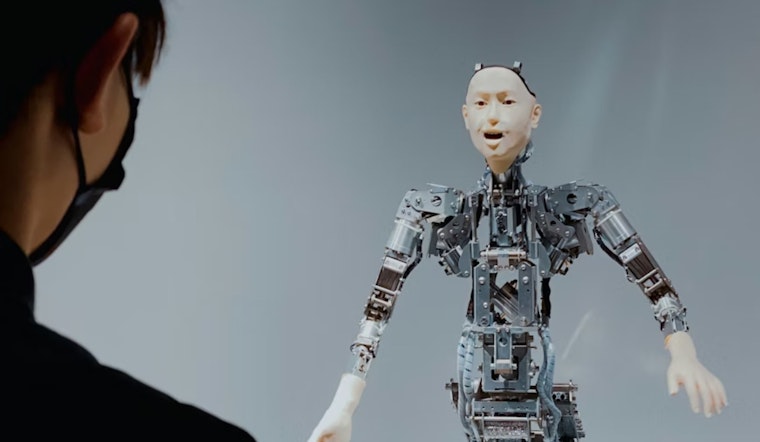
As humans, we're pretty great at understanding our environment visually. Our robots, on the other hand, not so much. But researchers from The Ohio State University are looking to close that gap with a groundbreaking dataset they've named RoboSpatial. In a study spotlighted by Ohio State News, robots taught with this new data showed better performance in spatial tasks than those with standard trainings, proving that they might just be getting the hang of this 3D world.
Lead researcher Luke Song clarified the point: "To have true general-purpose foundation models, a robot needs to understand the 3D world around it," he told Ohio State News. "So spatial understanding is one of the most crucial capabilities for it." Song and his team delivered their findings via oral presentation at the Conference on Computer Vision and Pattern Recognition, which is kind of a big deal in robot circles.
When it comes to practical applications, think less Terminator and more helpful household buddy. These robots, such as the Kinova Jaco arm being tested, are showing potential as aids for people with disabilities, answering spatially-oriented questions with accuracy that only further solidifies their viability. "Not only does this mean improvements on individual actions like picking up and placing things, but also leads to robots interacting more naturally with humans," Song explained, according to the Ohio State News.
Of course, the journey of a thousand miles begins with a single coded step. While the team, including co-authors Yu Su from Ohio State and NVIDIA's Valts Blukis, Jonathan Tremblay, Stephen Tyree, and Stan Birchfield, recognizes there are many questions still left on AI's development, the work on RoboSpatial suggests a solid path forward. Their results, and future robots, could be making lives easier in the next few years, if all goes according to plan. So, keep an eye out for bots with a newfound sense of space taking on new roles in the coming years. They might just surprise you with their grasp of the world around them.





