

























































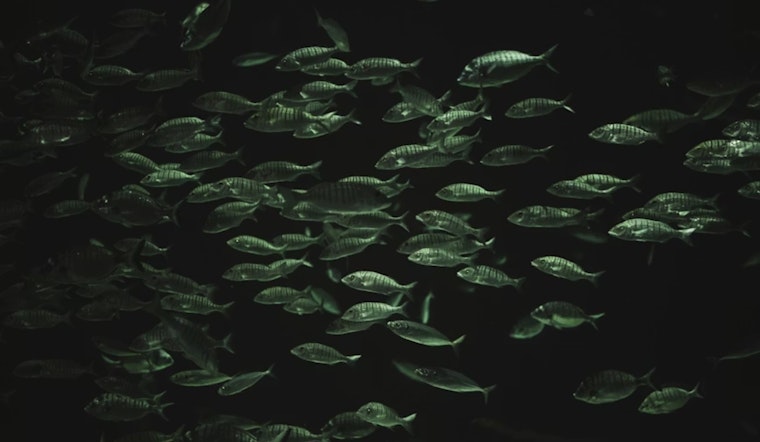
Delving into the depths of the ocean reveals a world far from the uniformity one might imagine. Indeed, researchers from The Ohio State University have illuminated the curious evolution of deep-sea fish, unveiling a diverse tapestry of body shapes sculpted by the unseen forces of their underwater milieu. The recent study, led by assistant professor Elizabeth Santos and published in Evolution, analyzed nearly 3,000 species to discover the varying evolutionary pressures faced by these aquatic denizens.
Results from the study brought to light the contrast between pelagic fishes, those swimming freely in open water, and the benthic species rooted to the ocean floor. Divergence in form among pelagic species ranged broadly, exemplified by creatures as disparate as the bulbous anglerfish and lithe eels — far outstripping the morphological diversity of their benthic counterparts, who generally exhibit a more uniform elongated, tapered anatomy. "We found that evolution pushes and pulls fish body shape in different directions depending on whether they’re benthic or pelagic," Santos told The Ohio State University news.
Spanning an impressive range of water columns, from 200 meters into the abyssal depths, the team's examination sheds light on the role of depth in driving divergence. The study suggests that as the waters deepen, a flourish of diversity in body shape accompanies, with more pronounced and rapid evolution detectable at greater depths. Intriguingly, the research points to the notion that benthic species' resemblance may be due to closely related species adapting in situ, while the pelagic diversity likely results from a patchwork of invading species over time.
The environment's lack of light is also a principal actor in this evolutionary drama. At depths beyond 200 meters, sunlight fades to ineffectuality, thwarting photosynthesis and influencing survival strategies. As Santos explained to The Ohio State University news, the darkened waters of the deep sea have fewer "big, powerful swimmers" compared with shallow-water species like the tuna, illustrating the profound effect deep-sea conditions have on evolutionary paths. Instead, deep-sea dwellers often adopt more sedentary hunting techniques, a reflection of their dark and isolated ecosystem.
This extensive research into the planet's largest and least human-dominated habitat not only highlights the hidden extravagance of biological forms but also underscores the myriad evolutionary journeys etched by location. As Santos remarked, as detailed by Ohio State University, "The one place that humans have not dominated on this planet is the deep sea – and there is still so much to learn about the mystery of what all is there."





