

























































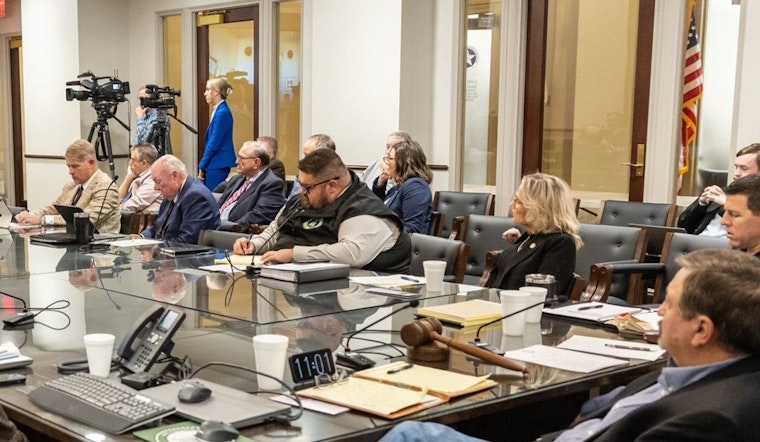
Oklahoma lawmakers are putting the state's high school sports rules under the microscope, turning their attention to the eligibility and transfer policies overseen by the Oklahoma Secondary School Activities Association (OSSAA). In particular, the implementation of OSSAA Rule 24, the so-called "Link Rule," has been scrutinized, as it aims to curtail student-athletes from hopping districts to follow their coaches for athletic advantage. This interim study was spearheaded by Reps. Nicole Miller, R-Edmond, and Tim Turner, R-Kinta, and involved in the House Common Education Committee.
According to a statement obtained by the Oklahoma House of Representatives, Miller expressed concerns about the impacts of Rule 24, saying, "We took a close look at how Rule 24 is being applied and whether it reflects the intent of the Open Transfer law." She emphasized the importance of preserving students' connections to the teams and activities that provide them with a sense of belonging despite changing schools for various reasons. Turner echoed this sentiment, underscoring that the purpose of the review was to address concerns, not a witch hunt, aiming to maintain the fun in high school sports and support students aspiring to reach the next level.
David Jackson, the Executive Director of the OSSAA, highlighted that the organization is not an external enforcer, but one created and governed by voluntary school administrators to ensure fair competition among the member schools. OSSAA also caters to about 30 co-curricular activities across the arts, servicing around 150,000 students annually. Regarding the eligibility rules, Jackson stated that OSSAA's foundational residence eligibility rule maintains that students can only compete in their own school district. However, out of 1,060 exception requests tracked in the first part of the school year, about 95 percent, or 1,003, were approved.
Parents and school representatives also brought to the table issues of limited access to public school athletic facilities for external camps or training sessions, particularly Chris Adamson, a Deer Creek School Board member. Adamson shared that his son had to travel out of state for exposure and recruiting events, as there is a lack of such opportunities in Oklahoma due to the restrictions. "These are incredibly important exposure and recruiting events," Adamson told the committee, suggesting that Oklahoma schools were missing out on potential revenue streams because of these limitations, according to the Oklahoma House of Representatives.
Discussions focused on the challenges and debates surrounding student-athlete mobility, the potential for talent development, and the broader impact on school sports policy. Officials from OSSAA and education lawmakers emphasized balancing athletic opportunities with educational priorities and community values.




