

























































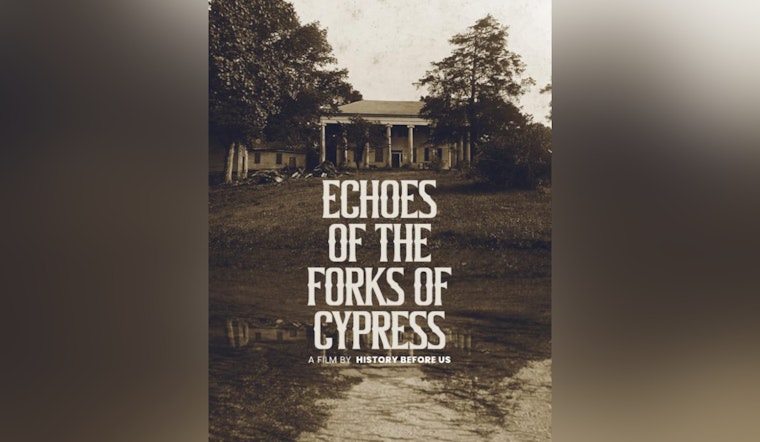
History buffs and documentary enthusiasts will have a unique opportunity to delve into the past this December at the State Capitol. Filmmaker Fredrick D. Murphy is set to host a screening of his latest documentary, "Echoes of Forks of Cypress," in the House Chamber of the North Carolina State Capitol on Dec. 1 from 6-8 p.m. Murphy's project is a part of his "History Before Us" initiative, which aims to explore historical narratives through the lens of film.
According to a press release from the N.C. Department of Natural and Cultural Resources, the film gives voice to those who were enslaved as well as the enslavers at Alabama's Forks of Cypress plantation, shedding light on their day-to-day struggles and resilience. Bringing a present-day angle, "Echoes of Forks of Cypress" converges the paths of descendants from both groups, documenting their efforts to confront a haunting past and initiate the healing process. Key figures in the documentary have North Carolina roots, tracing back to families associated with historic sites preserved and celebrated within the state.
Murphy will be present after the showing to engage in a conversation about the documentary's themes and answer questions from the audience. Panelists with insights into the subject matter will also partake, contributing to an expected robust dialogue. This event is open to the public, free of charge, and requires registration, which can be made online via Eventbrite.
Those interested in attending should note the importance of the State Capitol in preserving and interpreting North Carolina's history. Located at 1 E. Edenton St. in downtown Raleigh, the Capitol stands as a monument to the state's past, architecture, and legislative legacy. Visitors interested in learning more about the site or event can reach out to the provided contact number for additional information or visit the State Capitol's website for further details about its mission and offerings.
The N.C. Department of Natural and Cultural Resources, which oversees the State Capitol among over a hundred other sites across North Carolina, dedicates itself to managing and promoting the state's arts, culture, history, and natural areas. A network of historic sites, museums, parks, aquariums, and recreation areas are maintained by the department, which also encompasses the State Library, Archives, and various heritage commissions and programs committed to preserving North Carolina's rich and diverse cultural tapestry.


