

























































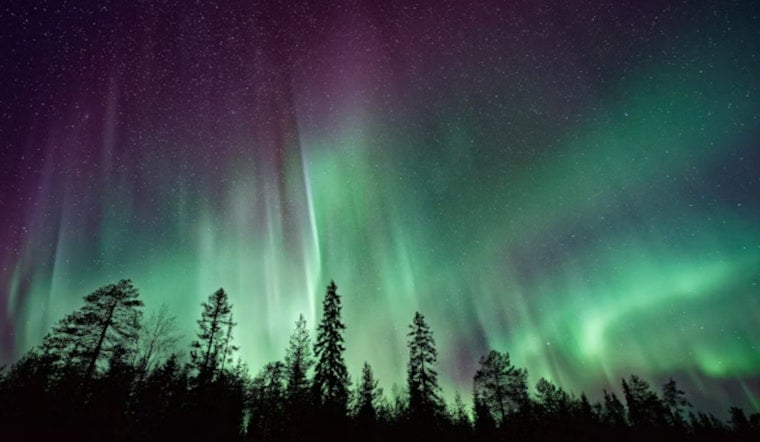
The celestial spectacle of the Northern Lights graced unexpected latitudes this week, with reports of the aurora borealis visible from parts of Southeast Texas. Photographs and anecdotes poured in on Tuesday evening, particularly from the Texas Hill Country, displaying an unusual occurrence in such southern skies, as reported by KHOU.
According to KHOU, the Northern Lights' appearance was a result of a severe G4 geomagnetic storm warning that spanned Tuesday, November 11, and Wednesday, November 12. These intense lights manifested due to a coronal mass ejection from the sun, a form of solar eruption, set to collide with Earth. The phenomena, ranging in hues from dazzling green to mystic purple, was observable in the skies above states as far south as Illinois and even Iowa, with Texans getting a rare glance despite typical low expectations for visibility in that region.
Beyond the aesthetic marvel, geomagnetic storms of this magnitude can interfere with critical infrastructure technology, but measures for mitigation are generally in place. The Click2Houston report notes that, aside from the awe-inspiring display, there were no immediate reports of disruptions. Continuing geomagnetic activities could mean that the Northern Lights may make an encore appearance on Wednesday evening.
Enthusiasts and curious spectators who captured this unexpected light show have been sharing their experiences widely. Click2Houston encouraged residents to submit their sightings through Click2Pins, detailing the process for uploading and sharing captured moments of this natural wonder.
For those who missed the aurora, or simply can’t get enough of astronomical events, eyes should next turn skywards for the Leonid meteor shower, peaking on November 17. With up to 15 meteors per hour predicted by NASA and favorable conditions courtesy of a new moon's timing, the skies will once again become a stage for celestial performances, as per KHOU.





