

























































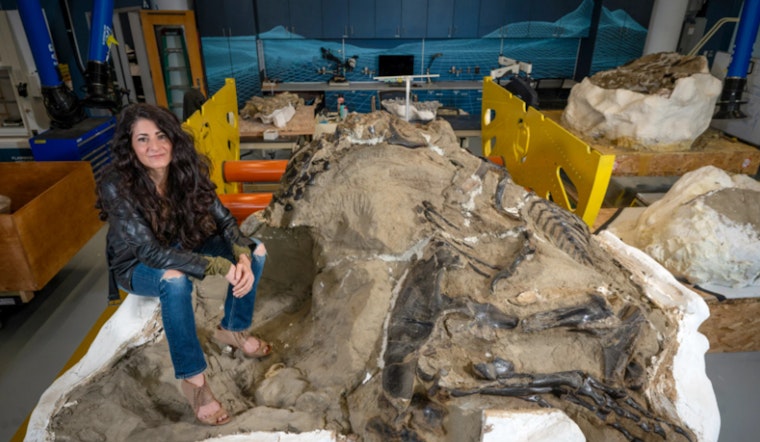
In an intriguing turn of events that paleontology enthusiasts and scientists alike are buzzing about, Governor Josh Stein, alongside the North Carolina Museum of Natural Sciences and NC State University, divulged a breakthrough in dinosaur research—a newly confirmed tyrannosaur species, Nanotyrannus, proven to have shared its prehistoric stage with the formidable T. rex. According to the Governor Office, this revelation stirs the pot of our current understanding, casting aside long-held beliefs in tyrannosaur evolution and ecology.
The formidable findings sprouted from the meticulous study of the "Dueling Dinosaurs," a pair of 67-million-year-old fossils nestled in the clutches of the SECU DinoLab, where visitors can spectate science in motion live, the discovery is not just a small footnote in paleontology books but rather a rewriting of chapters, raising questions about past studies that conflated the growth patterns and behaviors of T. rex and Nanotyrannus. Governor Stein, relishing in the scholastic triumph, stated, “This is the biggest dinosaur discovery of the decade, and I am proud that it is happening right here in North Carolina,” said Governor Stein, while Department of Natural and Cultural Resources Secretary Pamela Cashwell endorsed the collaborative spirit fueling this advancement in her statement that the partnership with N.C. State University played a cardinal role in facilitating such groundbreaking public engagement, as per the Governor Office.
The previously misidentified juvenile T.rex, now acknowledged as a mature Nanotyrannus lancensis, co-starred with a Triceratops in an eternal tussle immortalized in the Dueling Dinosaurs fossil, unearthed from Montana's Hell Creek Formation. This instance of ancient foes locked in time challenges the notion that the pre-asteroid-impact ecosystem of the Cretaceous harbored low diversity. Dr. Lindsay Zanno and Dr. James Napoli, of the Museum of Natural Sciences and Stony Brook University respectively, co-authored the study appearing in Nature journal, bearing witness to this narrative-altering fossil that could imply predator diversity flourished in the era preceding dinosaurs' demise; “This fossil doesn’t just settle the debate," Zanno asserted, "It flips decades of T. rex research on its head,” as noted by the Governor Office.





