

























































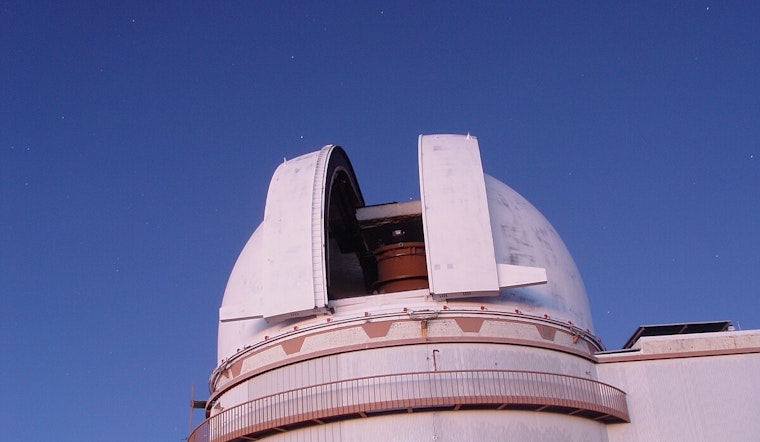
The University of Hawaiʻi has kicked off initial science operations for Robo‑AO‑2, a fully robotic laser adaptive‑optics system now riding on the UH 2.2‑meter telescope atop Maunakea. Designed to cancel out much of the atmosphere's blur, the system can sharpen images of hundreds of targets a night while needing only light human supervision. The upgrade effectively gives the five‑decade‑old UH88 a new lease on life as a rapid survey machine and instrument testbed where students train and new tech proves itself before moving to bigger telescopes.
According to University of Hawaiʻi System News, the Institute for Astronomy (IfA) announced the start of initial science operations on Tuesday and confirmed the project recently received $679,075 from the National Science Foundation and the Mt. Cuba Astronomical Foundation. That funding will help finish Robo‑AO‑2's full automation and support on‑telescope trials of a new adaptive secondary mirror.
How Robo‑AO‑2 Sharpens The Night Sky
Robo‑AO‑2 uses an eye‑safe ultraviolet laser guide star, a rapid wavefront sensor and a deformable mirror that adjusts in real time to correct atmospheric turbulence, as described by the Robo‑AO team on its website and in a recent commissioning preprint. Working together, these pieces let the instrument run robotically and deliver high‑cadence, near‑diffraction‑limited images, a sweet spot for quick follow‑up of transient events, high‑volume surveys and rapid vetting of exoplanet candidates, the team notes.
Testing An Adaptive Secondary Mirror
The new funding will also support trials of an adaptive secondary mirror that tackles turbulence directly at the telescope's secondary surface, a setup that can dramatically improve image quality, a press release via EurekAlert! explains. IfA scientists say the UH88 could become the first Maunakea telescope to host these novel actuators, offering a low‑risk way to validate the technology before it moves to much larger observatories.
Student Training And Habitable Worlds Prep
Graduate students are already in the mix. Guillaume Huber is using Robo‑AO‑2 to observe and vet target stars for NASA's future Habitable Worlds Observatory, Maui Now reports. For IfA, the UH 2.2‑meter serves as a hands‑on training ground where students help build, operate and fine‑tune instruments that will later head to larger facilities.
Small Telescope, Big Returns
Dropping cutting‑edge adaptive optics onto an older, smaller telescope is a conscious move to wring fresh science out of legacy hardware while training local engineers and astronomers. The UH88's long record of instrumentation innovation was recently honored as an IEEE Milestone, a nod to why the 2.2‑meter still matters as a testbed for ambitious optics work, Hawaii News Now reports.
As Robo‑AO‑2 settles into its initial science run, it is expected to deliver a steady stream of sharper images for surveys, exoplanet checks and transient follow‑ups while IfA teams keep pushing its automation and detector performance. Observers say the project highlights a broader shift toward smarter, faster ground‑based imaging that complements major space missions and helps shape the next generation of large telescopes.





