

























































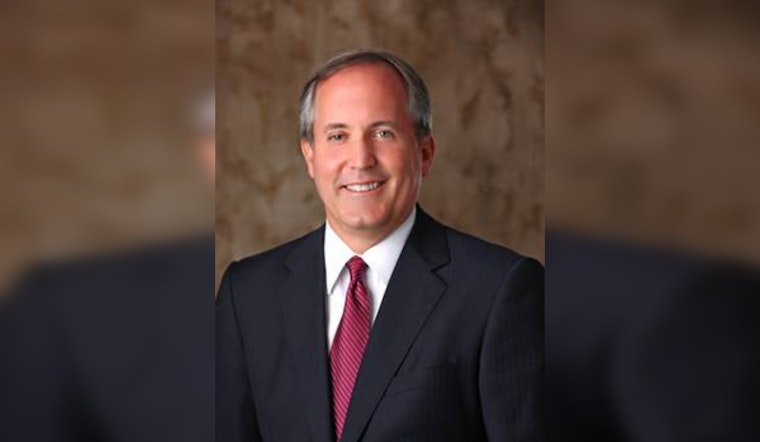
Texas Attorney General Ken Paxton is gearing up to take the state's court-blocked congressional map to the highest legal authority in the nation. Paxton announced plans to appeal a federal court's pause on Texas's latest congressional districts to the Supreme Court of the United States, confirming the state's determination to fight for its revamped territorial boundaries. The Texas Attorney General's Office relayed its intent to seek a stay on the district court's order that has temporarily put the state's redistricting plan on hold.
In a statement that was determined to quickly file an appeal, Paxton criticized opposition to the new map, describing it as an undermining attempt by "the radical left." "The Big Beautiful Map was entirely legal and passed for partisan purposes to better represent the political affiliations of Texas," Paxton argued, as noted in an official release from the Texas Attorney General's Office. In this narrative, Democrats are cast as the aggressors in a long-standing battle of redistricting warfare, with Paxton asserting that Texans are merely responding in kind to political maneuverings witnessed across Democratic-led states.
Paxton's rhetoric frames the map, supported by Texas Governor Greg Abbott and passed in August, as a legitimate exercise of the state's political will. The map's journey into law was already contentious, punctuated by Texas House Democrats' attempts to disrupt the process through quorum breaks. Despite these hurdles, the map, referred to as the "Big Beautiful Map" by the Texas Attorney General's Office, gained legislative approval.
The fight over congressional districts is not just a legal battle but a portrayal of deeper partisan divides. Democrats allege that the maps dilute minority voting power in violation of the Voting Rights Act, while Republicans contend that they are rightfully adjusting boundaries to mirror demographic changes and political affiliations. As Paxton prepares to seriously contest the block, which was imposed by the three-judge federal panel, he maintains his stance that the accusations of racism lodged against the map are unfounded strategies aimed at gaining a partisan edge, as per the Texas Attorney General's Office.
The next act in this legal drama will unfold at the Supreme Court, where Paxton anticipates vindication. The Texas Attorney General's Office confidence in the legal standing of Texas's map underscores the high stakes of redistricting battles, ones that have the power to shape the political landscape for the next decade. For now, the map's fate hangs in balance, with all eyes on a Supreme Court that will be asked to step into the fray of this deeply partisan contest over who gets to draw the lines that connect, and often divide, the voters of Texas.



