

























































Wahiawa, Central Oahu, witnesses the rise of a new agricultural milestone as the Department of Business, Economic Development and Tourism (DBEDT) teamed up with the State Agribusiness Development Corporation (ADC) to break ground on what is set to become a nexus of local food sustainability, an Agriculture and Food Hub destined to potentiate the state's farm-to-fork initiatives. This groundbreaking event was not your average soil-turning exercise; rather, it represented a commitment by state officials to cultivate a food-secure and economically diverse Hawaii. First Lady Jaime Kanani Green and other dignitaries came out to show their support, adding gravitas to the day's proceedings.
The Whitmore Village hub could very well be a game changer, offering commercial-scale manufacturing and a launchpad for entrepreneurs eager to catapult Hawaiian goods across the globe; a multifaceted partnership between DBEDT, ADC, and the local educational and law enforcement bodies that also includes the University of Hawaii College of Tropical Agriculture and Human Resilience (CTAHR), and the Department of Accounting and General Services – the entity which will oversee infrastructural improvements, all of it was excellently detailed in a report by DBEDT's official announcement.
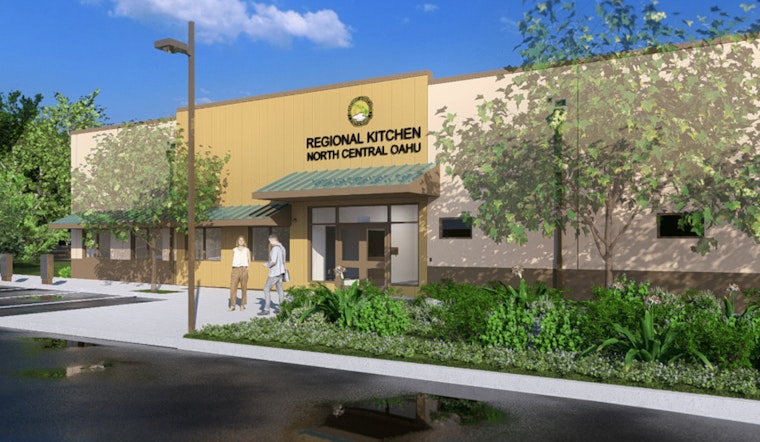
As a piece of the broader complex, the Hawaii Department of Education (HIDOE) has its sights set on a Central Oahu Regional Kitchen; this state-of-the-art facility is envisioning itself as a cornerstone for the farm-to-school scheme, linking the bounties of local farms directly to the plates in school cafeterias. First Lady Green emphasized in a statement the far-reaching benefits of this initiative: "Hawaii’s keiki and families deserve access to nutritious, locally prepared meals — every day and especially when times are hardest," also highlighting the broader implications of such a scheme for community well-being and crisis resilience, as noted by DBEDT.
Meanwhile, State Senator Donovan M. Dela Cruz, chair of the Senate Committee on Ways and Means, acknowledged the late Jimmy Nakatani's foresight in laying the groundwork for this innovation hub, recalling his understanding of even the simplest products like tsukemono as catalysts for empowering local communities. Senator Dela Cruz detailed in a ceremony interview that, "From Kona to Kekaha, and Hilo to Hana, the Food and Product Innovation Network can strengthen Hawaii’s local food systems and economy for generations to come," as per a report by DBEDT. Officials are optimistic that this hub could serve as a blueprint toward Hawaii meeting its ambitious legislative mandates, including doubling its food export by 2030 as mandated by Act 151 (2019) and achieving a minimum procurement of 50 percent local food by state departments by 2050 in line with Act 176 (2021).
For media professionals interested in augmenting their coverage of this greenfield project, ADC has made available a media repository that includes b-roll footage, photos, and interview snippets from the current event, all of which can be accessed via the DBEDT website. Insights into the hub's conception, architectural renderings, and a view into its potential are equally shared by the ADC and the University of Hawaii Community Design Center, signifying a collective stride towards a self-reliant and resilient Hawaiian future.





