

























































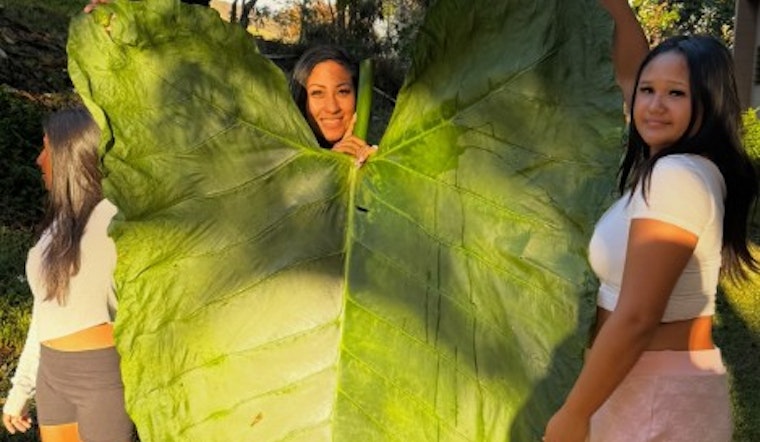
A hiking family on the windward side of Oʻahu says they came across a taro plant sporting a single leaf roughly 50 inches across during an Oct. 1 outing. The blade’s breadth — more than four feet from stem to edge — stopped them in their tracks and has locals buzzing. Most kalo leaves are measured in feet, not flirting with yardstick territory, which makes this one hard to miss.
Terrence "TJ" Oliver, who was hiking with his family, called the plant "a creature of god" and told KTSM the leaf "was like 50 inches [wide]" and that "from the center of the stem to the tip of the leaf was like 48 inches." The family says they found the plant on the east side of Oʻahu and told KTSM they haven’t contacted Guinness World Records.
How it stacks up to the world record
The current Guinness mark for the largest taro leaf comes from Kerala, India, at 114.2 cm (44.96 inches) long and 96 cm (37.79 inches) wide, according to Guinness World Records. If the Oliver family’s measurements hold up, their reported width would beat the Guinness width by more than 12 inches, and the tip-to-stem length would meet or slightly edge past the record. Official recognition would require careful measurement and a submission to Guinness for verification.
Kalo’s cultural and botanical weight
Taro — kalo in Hawaiian — is far more than a crop; it’s central to origin stories and is considered an elder sibling in Hawaiian tradition, notes the Mānoa Heritage Center. Botanically, many taro varieties produce leaves measured in feet rather than inches; extension resources note Colocasia leaves commonly reach two to three feet, with some giant cultivars producing leaves two to four feet long. That makes a roughly 50-inch blade unusual for the species.
What can make leaves this big
Growers and researchers point to genetics, steady moisture, rich soil, and sheltered microclimates as the secret sauce for super-sized foliage. University of Hawaiʻi trials have documented clear cultivar differences and found that increased irrigation and favorable conditions can significantly boost leaf area and fresh weight in certain taro varieties. Those same trials emphasize that leaf toughness and cooking quality vary, so big doesn’t automatically mean better in the kitchen or the loʻi.
For now, the leaf remains a local curiosity until experts can document it precisely. The family told KTSM they haven’t contacted record authorities, and any claim would need certified measurements and photos before Guinness World Records would consider an update. Botanists at local extension services or the University of Hawaiʻi are the likeliest next stop for verification; if the numbers hold, this Oʻahu leaf would be one of the largest taro blades on record.





