

























































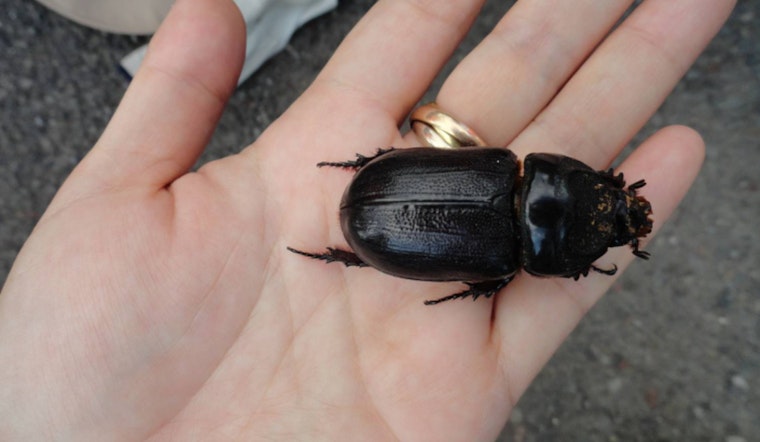
Hawaii’s trademark palm trees are in trouble, and the culprit is a horned scarab with a taste for the islands’ green waste. The coconut rhinoceros beetle bores into palm crowns and breeds in mulch piles, slipping through long‑standing green‑waste defenses. From Oʻahu to Kauaʻi, community crews, nurseries and county teams are scrambling with traps, detection dogs, helicopter sweeps and pesticide treatments to stop the pest from jumping from island to island. The response blends muddy fieldwork, lab research and policy moves as officials work to protect yards, parks and culturally important groves.
Where The Beetle Has Turned Up
State records show the beetle was first detected on Oʻahu in 2013 and later turned up on Kauaʻi, which triggered tighter surveillance and new limits on moving materials that could harbor larvae, according to the Hawaiʻi Department of Agriculture. On Maui, officials traced live larvae to a single Kīhei palm in November 2023, then fanned out to inspect roughly 26,000 trees for other breeding sites, according to local reporting and agency updates. Those discoveries pushed the state and counties to clamp down further on transporting mulch, compost and large potted plants to neighbor islands.
Island Responses: Molokaʻi And Lānaʻi
Some islands are leaning on their isolation as a defense. On Molokaʻi, residents successfully petitioned the state board for a yearlong, temporary ban on shipments of high‑risk materials, an effort to keep the island beetle‑free. On Lānaʻi, Pūlama Lānaʻi inspectors found larvae in two shipments and an adult beetle in 2024 and responded by limiting incoming potted plants and revising quarantine procedures to cut down on hitchhiking pests, as reported by Honolulu Civil Beat.
A Promising And Heavily Regulated Biocontrol
At the University of Hawaiʻi, researchers are testing a virus‑based biocontrol that was brought into the islands in September, with hopes it will eventually help knock back beetle populations. Before any field use, however, the project must clear multiple rounds of host‑range trials and regulatory reviews. “I am hoping the science is done in two years,” Principal Investigator Mike Melzer told Honolulu Civil Beat, noting that the U.S. Department of Agriculture currently allows testing only on the larval stage. Melzer’s role is reflected in university grant listings for CRB monitoring and control research, which support laboratory and field monitoring work at UH (UH CTAHR).
Field Tactics: Dogs, Traps And Treated Trees
On the ground, response teams are relying on a mix of old‑school and high‑tech tools. Crews set pheromone traps and work with specially trained detection dogs to sniff out breeding piles, while helicopter surveys help map large mulch sites that need inspection or removal, according to the state’s response program and partner teams. Counties and the CRB Response Team have also turned to targeted pesticide treatments around ports and airports and have urged green‑waste managers to inspect and sanitize loads before shipment, local reporting and response pages show (CRB Response/University of Hawaiʻi; Maui Now).
Money, Machines And How Communities Are Paying
Keeping up this level of defense is not cheap, and state funding has followed. Lawmakers boosted appropriations for invasive‑pest work, routing state money and targeted county grants into green‑waste management, outreach and detection. The Legislature and the Hawaiʻi Department of Agriculture directed new funds to coconut rhinoceros beetle prevention, while counties secured dedicated grants to cover chippers, shared roll‑off bins and community response capacity, according to state budget documents and local coverage (Hawaii State Legislature; Big Island Now).
What Residents Should Do
Officials say everyday habits still matter as much as the high‑profile science. Residents and landscapers are urged to check compost and mulch piles regularly, avoid hauling potentially infested green‑waste between islands and report any suspected larvae or beetle damage to the state hotline. Guidance on spotting coconut rhinoceros beetle damage and reporting possible breeding sites is available from the Hawaiʻi Department of Agriculture and the CRB Response Team, which maintain online resources and hotlines for homeowners and landscape professionals (Hawaiʻi Department of Agriculture).
Outlook
Scientists and island crews say Hawaii still has a window to limit the damage, but only if inspections, green‑waste management and community vigilance keep pace while laboratory research and regulatory reviews continue. The near term fight will be won on the ground, by neighbors, nurseries and county crews working side by side to keep mulch piles and potted plants from turning into the beetle’s next breeding site.





